
Connections Hint Today Mashable Winning Puzzle Daily

Introduction
In today’s digital world, puzzles and brain teasers have become more than just pastimes—they are cultural phenomena. Among these, Connections, a daily word puzzle created by The New York Times, has emerged as one of the most addictive and challenging games online. Much like Wordle before it, Connections has developed a strong fan base of players who eagerly search for “connections hint today mashable” to get help with tricky groupings without fully spoiling the game.
What is Connections?
Connections is a word association game where players are presented with 16 words. The goal is to group these words into four categories of four words each. Unlike crosswords or Wordle, there are no direct clues—just the words themselves.
For example, you may be given words like:
Mercury, Venus, Mars, Jupiter
Blue, Red, Yellow, Green
Flute, Drums, Violin, Guitar
Baseball, Soccer, Tennis, Basketball
The challenge lies in identifying subtle relationships. Sometimes the connections are straightforward (like colors or planets), but other times they are tricky, involving double meanings, pop culture references, or wordplay.
Why Connections is So Popular
The massive popularity of Connections can be explained through several factors:
1. Simplicity Meets Challenge
Just like Wordle, the rules are easy to understand, but the execution can be difficult. This balance keeps players engaged.
2. Daily Format
Players get one puzzle a day, which creates anticipation and makes it part of their daily routine.
3. Community and Sharing
Much like Wordle’s shareable results, players enjoy discussing solutions online, sharing frustrations, and comparing notes. Searching for connections hint today mashable has become a ritual for those who want help without spoiling the fun.
4. Brain Training
Connection is more than entertainment—it sharpens cognitive skills, strengthens vocabulary, and enhances pattern recognition.
How to Play Connections: Rules and Gameplay
Connections follow a simple format but require careful thought.
Start with 16 Words: Each puzzle provides 16 words in a 4x4 grid.
Form 4 Groups: The task is to organize them into four sets of related words.
Careful Guessing: You are allowed up to 4 mistakes. After that, the game ends.
Difficulty Levels: Each puzzle includes categories of varying difficulty—from easy (colors, animals) to more obscure (slang, puns, or niche trivia).
This blend of clarity and challenge keeps players returning daily.
The Role of Mashable in Providing Hints
Mashable, a leading digital media platform, has embraced the Connections craze by publishing daily hints and guides. Players often search for connections that are mashable today when they are stuck but don’t want to see the complete answers.
Mashable’s coverage usually includes:
Light nudges (general hints without giving away categories).
Category clues (subtle descriptions that point players in the right direction).
Full answers (for those who truly cannot solve it).
This layered approach allows players to decide how much help they want. For many, Mashable has become the go-to destination for hints, keeping the fun alive without outright spoiling the game.
Strategies to Solve Connections Without Spoilers
Winning at Connections requires more than luck. Here are effective strategies:
1. Scan for Obvious Categories First
Start with the easiest groupings, like months, sports, or musical instruments. This reduces clutter and narrows down tricky sets.
2. Beware of Red Herrings
Connections often include words that fit multiple categories. For example, “Mercury” could be a planet, a chemical element, or even a car brand. Identify overlaps early.
3. Think Beyond the Literal
Sometimes categories are abstract, like “Words That Rhyme” or “Tech Slang.” Don’t get stuck thinking only in straightforward terms.
4. Process of Elimination
If a word doesn’t clearly fit into remaining groups, it’s often a key to unlocking the puzzle.
5. Use Mashable Hints Sparingly
Searching for connections hint today mashable is a great fallback option, but try solving on your own first. Using small nudges instead of full answers helps improve problem-solving skills.
Common Types of Categories in Connections
Based on past puzzles, here are some recurring types of categories you may encounter:
Colors (Red, Blue, Green, Yellow)
Countries or Capitals (Paris, Rome, Tokyo, Berlin)
Slang or Abbreviations (LOL, BRB, TTYL, OMG)
Music Genres (Jazz, Rock, Pop, Hip-Hop)
Animals (Tiger, Lion, Bear, Wolf)
Pop Culture References (Characters, Movies, Celebrities)
Wordplay (Homophones, Rhyming Words, Synonyms)
Recognizing these patterns makes future puzzles easier to crack.
Why People Search for “Connections Hint Today Mashable”
The phrase “connections hint today mashable” has become popular because it reflects the sweet spot between wanting a little help and avoiding spoilers. Unlike outright answers, hints preserve the puzzle’s challenge.
Daily Ritual: Players incorporate Mashable hints into their morning or evening routine.
Avoiding Frustration: Sometimes a puzzle is too obscure, and a hint prevents players from quitting.
Community Buzz: Mashable’s articles create a space for shared experiences and discussions.
Connections vs. Other Word Games
Connections is often compared with other popular word games.
Connections vs. Wordle
Wordle: Guess a five-letter word in six tries.
Connections: Group 16 words into categories.
Verdict: Wordle is about vocabulary precision, while Connections emphasizes association and lateral thinking.
Connections vs. Crossword
Crossword: Requires definitions and clues.
Connections: Relies on pattern recognition.
Verdict: Crosswords test general knowledge, while Connections challenges conceptual linking.
Connections vs. Spelling Bee
Spelling Bee: Create as many words as possible from given letters.
Connections: Sort words into hidden themes.
Verdict: Both require creativity, but Connections lean on logic and categorization.
Cultural Impact of Connections
Connections has gone beyond being a puzzle—it has become a cultural talking point.
Social Media Buzz: Players share their results and frustrations daily.
Content Creation: Websites like Mashable generate traffic by publishing hints and strategies.
Educational Use: Teachers incorporate the puzzle into classrooms to build vocabulary and critical thinking.
Community Bonding: Much like Wordle, it creates a sense of global participation.
The Psychology of Why We Love Connections
Connections appeals to several psychological triggers:
Pattern Recognition: Humans are naturally wired to find connections between things.
Challenge and Reward: Solving a difficult puzzle releases dopamine, creating satisfaction.
Social Validation: Sharing wins online provides recognition and encouragement.
Control in Chaos: In a world full of uncertainty, successfully grouping words feels like creating order.
How Mashable Keeps the Game Fun
Mashable has struck a balance between helping players and keeping the puzzle enjoyable. By offering tiered hints, it allows players to:
Get unstuck without spoiling the whole experience.
Feel supported by a broader community.
Engage with cultural trends tied to the puzzle.
Their daily coverage ensures that people searching for connections hint today mashable always find timely guidance.
Tips for New Players
If you’re new to Connections, here are quick tips:
Start with the obvious categories.
Don’t overthink early guesses.
Save tricky words for last.
Limit mistakes by double-checking before submitting a group.
Use Mashable hints when completely stuck.
The Future of Connections
Given its explosive popularity, Connections is likely to follow in Wordle’s footsteps. Possible developments include:
App Expansion: A standalone app with archives and extra features.
Community Features: Chat rooms or leaderboards.
Educational Integration: More schools adopting it as a classroom activity.
Partnerships: Websites like Mashable will continue playing a central role in sustaining interest.
Conclusion
Connections has cemented itself as one of the most engaging word puzzles of our time. Its mix of simplicity, challenge, and daily ritual makes it universally appealing. For many, Mashable provides the perfect balance of hints and encouragement, leading to the popularity of the search phrase connections hint today mashable.
Whether you are solving the puzzle for fun, mental exercise, or to join in on the global conversation, Connections is more than a game—it’s a cultural experience. With smart strategies, a little patience, and occasional help from Mashable, you can master the daily challenge and fully enjoy the satisfaction of finding hidden links.
FAQS:
1. What is the “Connections” puzzle game?
Connections is a daily word association puzzle from The New York Times, where players group words into four related categories using logic and reasoning.
2. What does “Connections Hint Today Mashable” mean?
It refers to the daily hints and clues for the Connections puzzle shared by Mashable, helping players solve the challenge without revealing all the answers.
3. How does the Connections puzzle work?
Players must arrange 16 words into 4 groups of 4, where each group shares a common theme — such as colors, sports, or movie titles.
You only get 4 mistakes, so careful thinking is key!
4. When is the Connections puzzle updated?
A new puzzle is released every day at midnight (local time), giving players a fresh set of words and categories daily.
5. Where can I find today’s Connections hints and answers?
You can find today’s hints and full solutions on websites like Mashable or msnwordle.net, which post daily updates for players who need a little help.
6. What’s the best way to win the Connections puzzle?
Start by identifying easy or obvious groups (like colors or countries), then eliminate options step-by-step. Always look for word patterns and shared meanings.
7. Why is the Connections puzzle so popular?
It’s fun, brain-teasing, and social! Like Wordle, it encourages critical thinking, builds vocabulary, and lets players share results with friends online.
Palworld Dungeon Locations: Complete Guide, Updates, and Essential Farming Tips
Palworld has quickly become one of the most talked-about survival and monster-collecting games, combining crafting, base-building, and intense combat in an open-world environment. One of the most important features in the game is dungeons, which play a crucial role in progression, rare loot collection, and boss battles.
In this in-depth guide, we will cover everything you need to know about Palworld dungeon locations, along with related topics such as Palworld updates, how to get leather in Palworld, whether Palworld is cross platform, and how to get Ancient Civilization Core in Palworld.
What Are Dungeons in Palworld?
Dungeons in Palworld are special instanced areas that players can enter to fight enemies, defeat bosses, and collect rare materials. These dungeons reset periodically and are one of the best sources for:
- High-level Pals
- Rare crafting materials
- Ancient Civilization Core
- Weapons and blueprints
- Experience points
Each dungeon has its own difficulty level and enemy types, making them essential for mid- to late-game progression.
Palworld Dungeon Locations (Complete Guide)
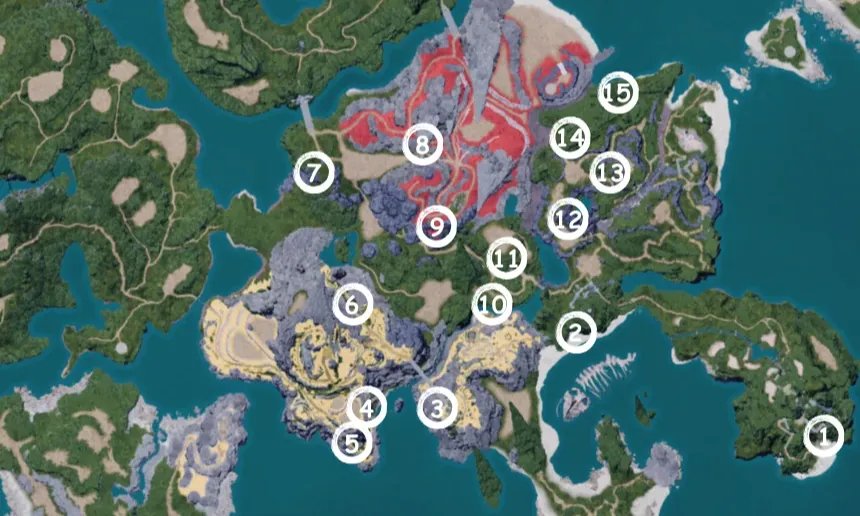
Palworld dungeons are scattered across the map and usually appear as cave entrances or stone structures embedded in cliffs and mountains.
1. Starter Area Dungeons
These dungeons are ideal for beginners.
Location Features:
- Near starting zones
- Low-level enemies
- Easy boss fights
- Great for farming early materials
Best Rewards:
- Basic weapons
- Low-tier Pal Spheres
- Leather
- Small amounts of Ancient Civilization Core
2. Forest Region Dungeons
Found in dense green areas with aggressive wildlife.
Why these are important:
- Medium difficulty
- Better loot than starter dungeons
- Higher chance of rare Pals
Tips:
- Bring fire or electric-type Pals
- Carry healing items
- Expect multiple enemy waves
3. Desert and Volcanic Dungeons
These are some of the most dangerous dungeon locations in Palworld.
Key Features:
- Strong enemies
- Environmental damage
- High-tier loot
Best Rewards:
- Ancient Civilization Core
- Rare weapon blueprints
- High-level Pal eggs
These dungeons are recommended only after reaching mid-to-late game.
4. Snow Region Dungeons
Snow biome dungeons are extremely challenging but rewarding.
What makes them special:
- Ice-type enemies
- Strong boss encounters
- High EXP rewards
You’ll need cold-resistant gear and strong Pals to survive.
Palworld Dungeon Reset System
One important mechanic to understand is dungeon resetting.
- Dungeons reset every few in-game days
- Bosses respawn after reset
- Loot refreshes automatically
- Great for farming rare materials
This makes dungeon farming one of the best strategies for progression.
How to Get Leather in Palworld
Leather is one of the most important crafting materials in Palworld.
Best Ways to Get Leather:
1. Defeating Animal-Type Pals
Some Pals drop leather when defeated, especially:
- Foxparks
- Lamball
- Direhowl
2. Dungeon Farming
Dungeons are one of the fastest ways to get leather in bulk.
3. Capturing and Butchering Pals
You can capture specific Pals and process them for leather.
Uses of Leather
- Armor crafting
- Weapon upgrades
- Saddle creation
- Base upgrades
Leather becomes essential as you progress further into the game.
How to Get Ancient Civilization Core in Palworld
The Ancient Civilization Core is one of the rarest and most valuable items in Palworld.
Best Ways to Obtain It:
1. Dungeon Bosses
The most reliable way to get Ancient Civilization Core is by defeating dungeon bosses.
2. Alpha Pals
Some Alpha Pals drop this item upon defeat.
3. High-Level Areas
Late-game zones have a higher drop chance.
What Is It Used For?
- Advanced crafting
- High-tier weapons
- Special technology unlocks
- End-game progression
Because of its rarity, farming dungeons is the most efficient method.
Palworld Update Overview
Palworld developers frequently release updates to improve gameplay and add content.
Recent Palworld Update Features:
- Improved dungeon stability
- Fixed enemy spawn bugs
- Performance optimization
- Balance changes to Pals
- Improved multiplayer stability
Upcoming Updates May Include:
- New dungeon types
- Additional Pal species
- More crafting options
- Expanded map regions
Staying updated ensures better gameplay and access to new dungeon content.
Is Palworld Cross Platform?
One of the most commonly asked questions is:
Is Palworld cross platform?
👉 Currently, Palworld is NOT fully cross-platform.
Here’s the breakdown:
Platform | Crossplay Support
PC (Steam) | ❌ No
Xbox | ❌ No
PC ↔ Xbox | ❌ Not yet
However, developers have stated that cross-platform support is planned for future updates, so this may change.
Best Tips for Dungeon Farming in Palworld
To maximize your efficiency:
✅ Prepare Before Entering
- Bring healing items
- Equip proper armor
- Carry enough Pal Spheres
✅ Use the Right Pals
- Fire types for forest dungeons
- Ice types for desert areas
- Electric types for boss fights
✅ Farm Strategically
- Focus on dungeons with good loot
- Reset dungeons regularly
- Prioritize Ancient Civilization Core
Why Dungeons Are Important in Palworld
Dungeons are essential because they provide:
- Fast leveling
- Rare crafting materials
- Powerful equipment
- Access to advanced technology
- High-level Pal encounters
Without dungeon farming, late-game progression becomes extremely slow.
Final Thoughts
Palworld dungeon locations are the backbone of progression in the game. Whether you’re hunting for Ancient Civilization Core, farming leather, or preparing for the next Palworld update, dungeons offer the best rewards.
To summarize:
- ✔ Dungeons are essential for leveling
- ✔ Best source of rare materials
- ✔ Required for end-game gear
- ✔ Regularly updated by developers
- ✔ Key to mastering Palworld
If you want to progress faster, unlock stronger gear, and dominate the world of Palworld, mastering dungeon locations is absolutely necessary.
FAQ – Palworld Dungeon Locations
1. What are Palworld dungeon locations used for?
Palworld dungeon locations are special areas where players can fight enemies, defeat bosses, and collect rare rewards. They are one of the best ways to gain experience, farm materials, and obtain valuable items like Ancient Civilization Cores.
2. Where can I find Palworld dungeon locations?
Palworld dungeons are found across different biomes such as forests, deserts, snowy regions, and volcanic areas. They usually appear as cave entrances or stone structures on the map and reset after a certain period.
3. How to get leather in Palworld easily?
You can get leather in Palworld by:
- Defeating animal-type Pals
- Farming enemies inside dungeons
- Capturing and processing specific Pals
Dungeons are one of the fastest ways to collect large amounts of leather.
4. How do I get Ancient Civilization Core in Palworld?
The best way to get an Ancient Civilization Core is by:
- Defeating dungeon bosses
- Fighting Alpha Pals
- Exploring high-level dungeon areas
This item is essential for advanced crafting and late-game progression.
5. Is Palworld cross platform?
Currently, Palworld is not cross platform.
PC and Xbox players cannot play together yet, but developers have confirmed that cross-platform support may be added in future updates.
6. How often do Palworld dungeons reset?
Dungeons in Palworld reset after a certain in-game time. Once reset, enemies and bosses respawn, allowing players to farm loot, experience, and rare materials again.
7. What did the latest Palworld update change?
The latest Palworld update improved:
- Dungeon performance
- Enemy AI behavior
- Game stability
- Balance changes to Pals
- Overall gameplay experience
Future updates are expected to add more dungeons, Pals, and features.
-
 Gaming11 months ago
Today Wordle Hint Puzzle Game Solve
-
 Gaming8 months ago
Octordle Hint: The Ultimate AI-Powered Guide to Winning the Game Smartly
-
 Gaming8 months ago
Toy Theater: The Ultimate Online Playground for Learning, Creativity, and Fun
-
 Gaming8 months ago
Strands Hint Today – Simple Clues Before the Answers
-
 Gaming7 months ago
Cowordle: The Ultimate Guide to the Multiplayer Word Puzzle Game
-
 Gaming7 months ago
Inside America’s Quiet Gambling Boom — What the Numbers Don’t Say Out Loud