
Subway Surfers Characters, Skills, Rarity and Unlock Cost

Introduction:
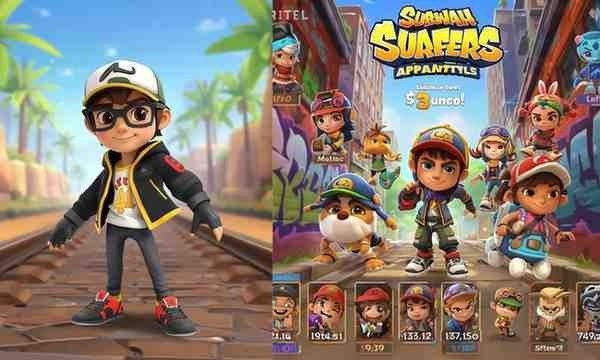
Subway Surfers characters are one of the main reasons why the game has stayed popular for more than a decade. Players do not only run for high scores but also try to unlock new characters, collect rare costumes, and complete their collection. From classic runners like Jake and Tricky to limited event characters released during world tours, these playable runners add personality and long-term excitement to the game.
Many players search online to know how many characters exist in the game, which ones are female, how to unlock rare ones, and the cost involved. This guide gives you practical information with real character names, rarity types, unlock methods, and costume options without unnecessary filler.
Why Characters Matter:
Characters are selectable runners that appear before starting a run. Each has unique design, personality, and sometimes multiple costumes. While performance doesn’t change, characters increase motivation and replay value.
Unlocking new runners gives goals beyond running endlessly. Seasonal updates, limited-time characters, and special events keep gameplay exciting. For many players, completing a collection is as satisfying as chasing high scores.
How Many Characters Are In The Game:
The exact number of playable runners changes frequently due to updates. Currently, there are over 300 characters and variations, including:
- Base characters
- Male and female runners
- Costume variants
- Limited-time event characters
Frequent world tour updates continue to expand the collection, making it a dynamic feature of the game.
Starter And Default Characters:
Beginner-friendly characters appear early in the game:
- Jake – the iconic face of the game, easy to unlock
- Tricky – popular female runner unlocked via tokens
- Fresh – stylish and fun animations
These characters are common, affordable, and ideal for new players starting their journey.
Popular And Rare Characters:
After the starters, many players unlock popular runners:
- Yutani – futuristic style, multiple costumes
- Spike – punk-themed design
- Frank – classic horror-inspired
- Lucy – sleek design, often collectible
- Tagbot – robotic look, unlocked through missions
Rare characters are visually appealing and often require coins plus keys, event tokens, or special challenges.
Female Characters:
Many players search specifically for female runners. Popular female characters include:
- Tricky
- Yutani
- Lucy
- Nina
- Coco
- Kim
- Zoey
- Rosa
- Tasha
Female characters frequently receive new costumes during events, increasing their collectibility.
Iconic Characters Like Tricky:
Tricky is one of the original and most recognizable characters. She can be unlocked using character tokens. While she does not provide gameplay advantages, her smooth animations and stylish design make her enjoyable to play. Multiple event-only costumes make her a must-have for collectors.
Event And Limited Characters:
Some characters appear only during world tours or special seasonal events:
- Monkbot
- Ninja
- Amira
- Alex
- Jamie
These runners are highly collectible and require active participation to unlock, often disappearing after the event ends.
Costume System:
Costumes allow customization without unlocking new characters. Costumes represent cities, festivals, or themes and can be obtained with coins, keys, or event tokens. Rare costumes are often tied to limited events, making them desirable for collectors.
Character Rarity:
Rarity levels determine unlock difficulty:
- Common – easy, permanent
- Rare – requires keys or missions
- Limited – only during events
- Event Exclusive – may not return for months
Rarity does not affect speed or gameplay but guides unlock strategy.
Skills And Abilities:
While some players search for “character skills,” all runners have the same speed and mechanics. What appears as skill differences are only visual animations, style, or personality traits, enhancing the overall experience.
How To Unlock Characters:
Characters can be unlocked through:
- Completing missions
- Collecting coins
- Using keys
- Participating in events
Daily play increases chances to unlock rare runners, while events often provide discounts or bonus rewards.
Unlock Cost Explained:
Unlock cost varies by rarity:
Common Characters – Jake, Tricky, Fresh
- Coins: 2,500–5,000
- Keys: 0
- Availability: Permanent
Rare Characters – Spike, Frank, Yutani, Lucy, Tagbot
- Coins: 10,000–50,000
- Keys: 5–15
- Availability: Missions, store purchase, or challenges
Limited / Event-Exclusive – Monkbot, Ninja, Amira, Alex, Jamie
- Coins: 50,000+
- Keys: 15–30 or event tokens
- Availability: Limited-time only
Tips: Save keys for rare/event characters, collect coins daily, participate in events, and track new releases to unlock characters efficiently.
Best Characters For Players:
Since performance is identical, the best runners are based on style preference. Beginners often prefer Jake or Tricky, while experienced players may collect rare or event characters for their unique designs.
Tips To Unlock Characters Faster:
- Play daily and complete missions consistently
- Focus on events for rare or limited runners
- Avoid unnecessary key spending
- Plan unlocks based on rarity and availability
Efficient planning helps complete a collection of all characters over time.
Conclusion:
Characters make Subway Surfers engaging and collectible. With hundreds of runners, female characters, rare event exclusives, and costume variations, there is always something new to unlock.
Whether you’re curious about rare runners, female characters, or how to unlock characters efficiently, this guide provides clear, practical information. By playing strategically, players can unlock a massive character collection and enjoy the game to its fullest.
FAQs:
1. How many Subway Surfers characters are there?
There are over 300 characters and costume variations in Subway Surfers, including common, rare, limited, and event-exclusive runners.
2. Which are the most popular Subway Surfers characters?
Popular characters include Jake, Tricky, Fresh, Yutani, Spike, and Lucy, known for their design and frequent use in collections.
3. How can I unlock rare Subway Surfers characters?
Rare characters usually require coins, keys, and completing missions. Some also appear during special events or seasonal world tours.
4. Are there female characters in Subway Surfers?
Yes, notable female characters include Tricky, Yutani, Lucy, Nina, Coco, Kim, Zoey, Rosa, and Tasha, many with special costumes.
5. Do Subway Surfers characters have special skills?
All characters run at the same speed and follow the same mechanics. What appears as “skills” are purely cosmetic animations and styles.
6. What is the unlock cost for Subway Surfers characters?
Common characters need 2,500–5,000 coins, rare characters require 10,000–50,000 coins plus 5–15 keys, and event characters may need 50,000+ coins or 15–30 keys/tokens.
7. Can I unlock characters without spending real money?
Yes, by collecting coins, using keys wisely, completing missions, daily challenges, and participating in events, you can unlock most characters for free.
8. Which Subway Surfers character should I choose first?
Beginners often prefer Jake or Tricky. Experienced players may focus on rare or event characters for unique designs, as gameplay is the same for all.

In the United States, gambling is supposed to be tightly regulated, fragmented state-by-state, and controlled by a framework rooted in the old casino capitals — Las Vegas and Atlantic City. Yet a quiet shift is underway. Across 2024–26, gambling has become less a location you visit and more an activity that follows people wherever the law allows it to exist.
And that law is stretching further every year.
From prohibition map to patchwork market
Six years ago, only a handful of states allowed legal sports betting. Today, more than 38 states and Washington D.C. in some form permit it — a transformation triggered by the Supreme Court’s 2018 decision overturning PASPA.
That ruling didn’t just open the door; it blew the hinges off.
States began to calculate the math themselves:
legal market + tax revenue + economic activity > prohibition.
The result: America is quietly building the largest regulated betting market on Earth, but without a single national rulebook or central regulator.
Where the money is actually going
U.S. sportsbooks reported over $120 billion in handle in 2023 — the amount wagered — and analysts expect that figure to cross $150 billion by 2026 if current trends hold.
But the numbers that should matter most aren’t the wagers; they’re the losses.
American bettors lost roughly $10–11 billion on sports bets in 2023 alone.
That’s not counting online casino play — legal in only seven states, yet already approaching $6–7 billion in annual operator revenue.
These numbers rarely make headlines. The public hears about tax wins, jobs, and Super Bowl betting frenzies, not the cumulative effect of tens of millions of micro-bets disappearing from debit cards every weekend.
The digital casino that never clocks out
One thing that separates the U.S. gambling boom from previous eras is accessibility.
Where Las Vegas once required a plane ticket, today gamblers need only a smartphone and a Wi-Fi signal.
Casino-style games — slots, blackjack, roulette — remain technically illegal online in most states. But regulators are discovering that “lines on paper” mean little to consumers who understand how to use VPNs, offshore domains, or social “sweepstakes” models.
That’s why, in online discussion threads, you’ll occasionally see references to non gamstop casinos or commentary about casinos not on gamstop, even though GamStop is a UK system. It’s shorthand for offshore platforms that operate outside U.S. law — a reminder that the digital border is far more porous than lawmakers imagined.
And while U.S. regulators stress legal options, player chatter often pushes toward whatever feels easiest or most entertaining, including casual mentions of the best non gamstop casino alternatives for those who don’t care where a website is licensed.
Who pays the cost
Industry lobbyists argue that legalisation reduces harm by replacing unregulated markets. There’s truth there: regulated sportsbooks pay taxes, offer customer records, and can be compelled to freeze accounts or block suspicious activity.
But states don’t yet collect consistent data on addiction rates.
Only seven states fund problem-gambling programs at levels public-health advocates deem adequate.
Some states that earn hundreds of millions in wagering taxes invest less than $1 million into treatment.
The absence of federal oversight means everyone measures “risk” differently.
One state bars credit cards for deposits; the next doesn’t.
One blocks celebrities on ads; another runs billboards outside universities.
Between the lines, a picture forms: the system isn’t designed — it’s evolving in real time.
What comes next
Analysts believe the U.S. market will continue expanding until:
1. Nearly every state legalises sports betting, and
2. A majority legalise or semi-legalise online casino play.
That second stage worries public-health groups most. Casino games, unlike sports betting, don’t require knowledge, research, or pre-existing fandom. They move faster, trigger dopamine quicker, and statistically create more losses over time.
If sports betting was the “gateway” step, online casinos are the real policy battleground ahead.
The unanswered question
America is building a new national pastime — without ever officially declaring it.
The real investigative question isn’t whether gambling will spread.
The numbers show that’s already settled.
It’s who will benefit and who will absorb the losses:
• State governments hungry for tax revenue?
• Massive private operators and their few parent companies?
• Or bettors themselves, who currently subsidise both?
With no federal standard, the U.S. is testing a vast social experiment in live mode.
Millions are participating. Billions are moving.
And the rules remain largely unwritten.
-
 Gaming1 year ago
Today Wordle Hint Puzzle Game Solve
-
 Gaming1 year ago
Connections Hint Today Mashable Winning Puzzle Daily
-
 Gaming9 months ago
Octordle Hint: The Ultimate AI-Powered Guide to Winning the Game Smartly
-
 Gaming9 months ago
Toy Theater: The Ultimate Online Playground for Learning, Creativity, and Fun
-
 Gaming8 months ago
Strands Hint Today – Simple Clues Before the Answers
-
 Gaming8 months ago
Cowordle: The Ultimate Guide to the Multiplayer Word Puzzle Game