
Barcelona vs Real Madrid- A Big El Clasico Rivalry Explain

Introduction:
One of the most famous and bitter rivalries is between FC Barcelona and Real Madrid CF. In a word, their matches – known as El Clasico – they are not just football matches, they are something that transcend the sport, bringing history, politics and culture into play. Since: The very first meeting in 1902 to the most recent epic battles, this rivalry represents footballs finest, national pride and everything personal. We take a look at the fascinating history of the Barcelona and Real Madrid in Spain's El Clasico, including famous hat-tricks and some noise around the 2026 edition.
The Origins of the Rivalry:
The Barcelona and Real Madrid rivalry extends more than just the game of football. Founded in 1899, FC Barcelona soon became an emblem of Catalanism and amassed a powerful aura of resistance to the Spanish monarchy and state oppression, most notably during the dictatorship of Francisco Franco in the mid-20th century. The regime of Franco supported Real Madrid, and the club became another symbol of the central Spanish government, leading to a sentiment that was resentful among Catalans.
By contrast, Real Madrid (established 1902) aligned itself with the Spanish royal family. This connection prompted Madrid to be seen as the establishment and for Barcelona to symbolise the voices of dissent, Catalan pride and self-rule. These political and cultural fissures would fuel one of the most fierce and emotional rivalries in football.
The roots of this rivalry are highly political, but its scope has come to be something much too big. El Clasico represents more than two teams facing off, in fact the competition to establish supremacy in Spanish football, Europe and globally.
Memorable Matches in History:
El Clasico has given us so many memorable moments over the years and some of the greatest ever individual performances. From the early 20th-century battles to those of more recent vintage, these matches are eagerly awaited by fans around the world. And then, of course, there is the fact that these are meetings steeped in history and passion with a great rivalry added to the equation. Here are some of the highlights:
1. The 2-6 Victory for Barcelona (2009)
One of the greatest games in El Clasico history took place on May 2, 2009. Barcelona, led by Pep Guardiola, have won in style at the Santiago Bernabeu with a 6-2 demolition. The game was one that showcased Barcelona's attacking genius as Lionel Messi, Thierry Henry and Seydou Keita ran rampant. The score was a huge statement, although it did symbolize the change of power in Spanish football as Barcelona would dominate for much of the next decade.
2. Cristiano Ronaldo’s Last El Clasico (2018)
The last El Classico game of Cristiano Rolando was in 2018 before he left Real Madrid, and once again he cemented his status. That he did so in a 2-1 victory was also a signature moment for Madrid supporters, as it symbolized the changing of an era. Ronaldo never failed to bring the thrills in El Clasico, and his recent move to Juventus only made that rivalry feel a lot less magnificent.
3. The 3-1 Win for Barcelona (2017)
Barcelona’s 3-1 victory against Real Madrid in 2017 featured two goals from Lionel Messi, the second one a stunner at the death. Messi's unforgettable goal was his bulging exclamation point -- the one that firmly etched his name into El Clasico lore. The match showed that Barcelona just loved digging themselves out of tight corners, and this makes it one of the most memorable clashes of the century.
Recent Match 2026:
The rivalry with no end. The 2026 El Clasico was simply another epic installment of a historic clash. The game also provided a snapshot of both clubs’ evolution in recent years, featuring Barcelona’s overhaul post-Lionel Messi and Real Madrid post-Cristiano Ronaldo. Despite the numerous faces in both teams, you could never tell this battle lacked the fire and angst which was always part of this fixture.
Pre-Match Build-Up
Both teams looked very different coming into the match. Barcelona, with a new coach in charge, had bet heavily on developing young talent like the forward Ansu Fati and midfielders Pedri and Gavi. These stars were Barcelona’s future, full of the creative flair and technical inspiration which would drive the club forward.
Real Madrid, on the other hand, had gone nuclear in attack with Vinicius Jr., Rodrygo and Eduardo Camavinga leading from the front. The departure of Cristiano Ronaldo had cleared the way for younger talents to impress and a changing Real Madrid team appeared ravenous.
Both clubs had also made key acquisitions, Barcelona replenishing their ranks to marry with those produced by the academy graduates and Real Madrid maintaining a steady stream of both potential market dominators and future competitors.
Current Barcelona Players:
Goalkeepers:
1. Marc-André ter Stegen (Captain)
A key figure in Barcelona’s defense, known for his shot-stopping ability, leadership, and composure under pressure.
Defenders:
2. Jordi Alba (Left-back)
A veteran of the squad, known for his overlapping runs and ability to provide assists.
3. Gerard Piqué (Center-back)
One of Barcelona’s all-time great defenders, although he may be nearing the end of his playing career.
4. Clement Lenglet (Center-back)
A strong and reliable presence in defense.
5. Eric García (Center-back)
A young and talented defender who has been instrumental in Barcelona's backline.
6. Dani Alves (Right-back)
The Brazilian full-back has been a dynamic player for Barcelona, known for his energy and attacking prowess.
7. Sergi Roberto (Right-back/Midfielder)
A versatile player capable of covering both defense and midfield positions.
Midfielders:
8. Frenkie de Jong
A central midfielder with excellent passing range and vision, pivotal to Barcelona’s ball movement.
9. Pedri
A young sensation, known for his agility, creativity, and composure on the ball.
10. Gavi
A rising star in Barcelona’s midfield, known for his aggressive pressing and technique.
11. Sergio Busquets (Defensive Midfielder)
The experienced defensive midfielder, a key figure in controlling the tempo of the game.
12. Miralem Pjanic
A player with great vision and passing ability, contributing to the creative side of Barcelona’s game.
13. Riqui Puig
A talented young midfielder with excellent dribbling skills.
Forwards:
14. Ansu Fati
Barcelona’s young attacking sensation, known for his pace, dribbling, and finishing ability.
15. Robert Lewandowski (Striker)
One of the top goal-scorers in the world, Lewandowski is a clinical finisher and a focal point for Barcelona’s attack.
16. Ousmane Dembélé
A pacy winger, known for his dribbling and creativity.
17. Ferran Torres
A versatile forward who can play across the attacking positions, offering speed and directness.
Current Real Madrid Players:
Goalkeepers:
1. Thibaut Courtois (Goalkeeper)
One of the top goalkeepers in the world, Courtois is known for his shot-stopping ability and leadership at the back.
Defenders:
2. Dani Carvajal (Right-back)
A seasoned right-back with great defensive and attacking qualities.
3. David Alaba (Center-back)
A versatile defender, known for his leadership and composure under pressure.
4. Éder Militão (Center-back)
A fast and aggressive defender who has developed into one of Real Madrid’s key players.
5. Ferland Mendy (Left-back)
A solid left-back with strong defensive qualities and the ability to push forward.
6. Antonio Rudiger (Center-back)
A powerful defender, who brings leadership and toughness to Madrid’s backline.
Midfielders:
7. Luka Modrić (Central Midfield)
The Croatian playmaker is known for his passing ability, vision, and composure.
8. Toni Kroos (Central Midfield)
Another veteran, Kroos is a master of controlling the tempo of the game with his vision and passing accuracy.
9. Casemiro (Defensive Midfield)
A tough, defensive midfielder who breaks up attacks and provides balance to Madrid’s midfield.
10. Federico Valverde (Central Midfield)
A box-to-box midfielder, known for his energy, vision, and tactical intelligence.
11. Eduardo Camavinga (Central Midfield)
A talented young player, Camavinga is known for his dribbling and ability to control the ball under pressure.
12. Isco (Attacking Midfield)
A creative midfielder with excellent ball control and dribbling skills.
Forwards:
13. Karim Benzema (Striker)
Real Madrid’s captain and main goal-scorer, known for his technical skill, finishing, and leadership.
14. Vinicius Jr. (Left-wing)
A pacey winger with great dribbling skills and the ability to score crucial goals.
15. Rodrygo (Right-wing)
A talented young forward, known for his pace, creativity, and finishing.
16. Marco Asensio (Right-wing)
A versatile forward who can play across various attacking positions.
2026 Match Recap:
El Clasico between Barcelona and Real Madrid at Camp Nou in 2026 unfolded under a superheated atmosphere. Both sides were starting the match with fresh faces and a new sense of what they could do in the season, and the clash lived up to its hype.
First Half: Real Madrid's Early Lead-
The game began with both sides looking to take control and make an impact early on. Barcelona began with the ball, looking to dominate possession and dictate their tempo as customary, with Real Madrid wanting to spring on them through counter-attacks using their pace and technical ability.
Real Madrid took the lead in the 25th minute. Luka Modrić played a beautiful through pass to Karim Benzema who had only Marc-André ter Stegen to beat and he did for his 1-0 lead for Madrid. Benzema’s movement and finishing skills were both in evidence as he fired home the opener.
Barcelona responded positively and enjoyed their first period of attacking pressure. Pedri, Gavi and Frenkie de Jong ran the midfield and tried breaking down Madrid’s defense. Barcelona leveled in the final moments of the first half. The boar Robert Lewandowski finished a left-footed assist from Pedri with the right leg of his own 1-1-signing.
Second Half: Fati and Benzema Shine-
The second half commenced with a faster pace of play. Barcelona took the lead again in the 65th minute after Jordi Alba delivered an excellent cross that was headed by Ansu Fati into the back of the net, 2-1 to Barça.
But Real Madrid would not be denied. Toni Kroos then took a stunning free-kick in the 75th minute to curl at top corner and make it 2-2. The game had becomed end-to-end. Both teams were going for it.
And with seconds to play, Barcelona’s young star Ansu Fati emerged as the hero of the match. In the 89th minute he was played in behind by Pedri, and having sprinted tens of metres on an electric run with Sezeguet being his closest rival, Ansu Fati left Thibaut Courtois helpless as he put Barcelona ahead again with a 3-2 advantage.
Player Performances
Barcelona:
· Ansu Fati: Fati was undoubtedly the best player on the pitch. His two goals, which included the winner in the 89th minute, lifted Barcelona to the victory. His pace, poise and knack for goal was all there.
· Robert Lewandowski: The forward from Poland scored Barcelona’s equalizer and had a substantial game in the opposition’s penalty area. His hold-up play, his position was important in our team.
· Pedri: Pedri’s vision, and his passing, was essential to Barcelona’s build-up. His assist on Fati’s match-winner was a wonderful illustration of his ingenuity.
Real Madrid:
· Karim Benzema: The ever reliable forward found the back of the net (1). His movement and touch is of huge benefit to Real Madrid.
· Toni Kroos: One of many memorable moments from the match was Kroos’s free kick to equalize. He just controlled the game, had influence on the midfield.
· Vinicius Jr.: In the defeat, Vinicius Jr. continued to plague the Barcelona defense with his pace. He was elusive with the ball at his feet,’ and attacked well to help open up Madrid.
El Clasico in the Modern Era:
El Clasico certainly isn’t only about football, it’s so much more besides. The competition has now come to represent the ideological, regional and identity-based conflicts. The match is one of Catalan nationalism for Barcelona and one of upholding the dignity and tradition of Spanish unity for Real Madrid.
El Clasico is also an international event with fans watching from around the globe. The match is watched by millions, largely thanks to the advent of digital media and global broadcasting, thus ensuring it is one of the biggest – and most lucrative – encounters in world sport. The enmity now goes beyond Spain, it is worldwide.
The two sides are still outlets trying to push the boundaries in football. Barcelona and Real Madrid are among the richest clubs in the world, with huge global fanbases and elite sponsorship and partnership deals. The stakes in the El Clasico clash have never been higher, not just for bragging rights but for the financial and commercial repercussions that accompany victory.
Conclusion:
The battle of Barcelona vs Real Madrid goes well beyond the football. It’s a grudge match that dates back decades and involves history, culture and identity, one that millions of soccer fans around the globe will be watching. From early political tensions to on-the-pitch clashes of this very day, El Clasico already was and still is the most electrifying match in football.
As was the case in that 2026 meeting of the two sides, El Clasico is a rivalry constantly being renewed by fresh generations of players. For proof of that, look no further than Barcelona’s 3-2 victory, a match that was an advertisement for the passion, drama and sheer footballing ability that have made El Clasico one of sport’s enduring spectacles for more than a century.
For the supporters of both clubs, though, El Clasico is always about more than just a game — it’s about football, culture and competition.
FAQs:
1. Why is Barcelona vs Real Madrid called "El Clasico"?
“El Clasico,” named after the deep-feeling rivalry between the two and ultimately representing political, cultural and sporting tensions that split Barcelona and Real Madrid.
2. When did the Barcelona vs Real Madrid rivalrystart?
The rivalry was born in 1902, but it was heightened during the Spanish Civil War and Franco’s rule, when Real Madrid became connected to the Spanish establishment.
3. Who won the 2026 El Clasico?
Barcelona were successful 3-2 in the 2026 El Clásico with Ansu Fati netting a double for Barca - and the winner deep in stoppage time!
4. Who were the key performersin 2026’s El Clasico?
Ansu Fati shone for Barcelona while Karim Benzema and Toni Kroos were influential for Real Madrid.
5. How frequentlydo Real Madrid and Barcelona face each other?
Barcelona and Real Madrid play at least twice a season in La Liga, but they might also meet in domestic cups and competition between countries.
6. Why is El Clasico so crucial toboth clubs?
El Clasico is more than just a game of football; it’s the battle of Catalan pride (Barcelona) vs. Spanish tradition (Real Madrid), and said to represent identity both cultural and political.
7. Who has won more El Clasicos?
Real Madrid leads in head-to-head wins in El Clasico as of 2026, but Barcelona has held the edge in recent years.
8. Who were the legendsin El Clasico history?
Lionel Messi, Cristiano Ronaldo, Karim Benzema and Sergio Ramos are just some of the name who made El Clasico history.
9. Whatis unique about El Clasico as compared to other football rivalries?
El Clasico is special in a way that it combines football with profound cultural, political and historical ramifications which makes every clash between the two Giants highly emotional and unpredictable.
10. What is the impactof fans in El Clasico?
The atmosphere from the fans is always electric as both sets of Barcelona and Real Madrid supporters get behind their respective teams, making the match that much more intense and that much more important.
Introduction:
The India vs Pakistan T20 world cup match instantly creates excitement, emotion, and tension among cricket lovers across the globe. This rivalry is not just about bat and ball; it represents pride, passion, history, and millions of beating hearts. Whenever these two teams face each other in a T20 World Cup, the match becomes more than a sporting event—it turns into a festival watched by billions.
T20 cricket has added extra fire to this rivalry. The short format brings aggressive batting, fearless bowling, and nail-biting finishes. One over can change the match, and one moment can become history. Fans wait for years just to witness this clash, knowing very well that emotions will run higher than the scoreboard.
Historical Rise of Their Cricket:
India’s Cricket Journey
India’s cricket history started with Test cricket in 1932 but the change came after the World Cup win of 1983. At the same time, Indian cricket has burgeoned into a global colossus. India, who have a good domestic structure, exposure to IPL and first-class facilities – have always churned out match-winners into all formats including T2O.
India were quick to adapt to T20 cricket. A new chapter began in 2007 when they emerged victorious at the inaugural ICC T20 World Cup. With aggressive openers, smart spinners and good death-overs bowlers, India constructed a T20 unit that lays emphasis on consistency and depth.
Pakistan’s Cricket Journey
Pakistan’s cricket history is known for raw talent and unpredictability. Since their Test debut in 1952, Pakistan has produced some of the most naturally gifted cricketers the world has ever seen. Fast bowling has always been their biggest strength, and in T20 cricket, this skill becomes even more dangerous.
Pakistan won the ICC T20 World Cup in 2009, proving their dominance in the shortest format. Their ability to surprise stronger teams makes them one of the most exciting sides to watch.
The Rivalry Begins
When India and Pakistan first played each other, no one imagined the rivalry would reach this level. Over time, political separation added emotional weight, turning cricket matches into symbolic battles. Every encounter now carries history, pride, and global attention.
Total T20 Match History Between India and Pakistan:
India and Pakistan have faced each other multiple times in T20 Internationals, mostly in ICC tournaments. These matches are rare, making each one extremely valuable.
Overall T20 Summary (India vs Pakistan)
- Total T20 Matches Played: 13
- India Won: 9
- Pakistan Won: 4
- No Result / Tie: 0
- Most Matches Played In: ICC T20 World Cup & Asia Cup
- India’s Strength: Big-match temperament, chasing under pressure
- Pakistan’s Strength: Fast bowling, early breakthroughs
India vs Pakistan – T20 Match History (List Format)
- 2007 T20 World Cup (Group Stage) – Match tied, India won via bowl-out
- 2007 T20 World Cup (Final) – India won by 5 runs
- 2012 T20 World Cup – Pakistan won by 8 wickets
- 2014 T20 World Cup – India won by 7 wickets
- 2016 T20 World Cup – India won by 6 wickets
- 2021 T20 World Cup – Pakistan won by 10 wickets
- 2022 T20 World Cup – India won by 4 wickets
- 2024 T20 World Cup – India won by 6 runs
- Asia Cup 2012 (T20) – Pakistan won by 5 wickets
- Asia Cup 2016 (T20) – India won by 5 wickets
- Asia Cup 2022 (Group Stage, T20) – India won by 5 wickets
- Asia Cup 2022 (Super Four, T20) – Pakistan won by 5 wickets
Upcoming India vs Pakistan T20 Match
- Tournament: ICC Men’s T20 World Cup 2026
- Stage: Group Stage
- Match: India vs Pakistan
- Format: T20 International
- Venue: Sri Lanka
- Significance: One of the biggest and most watched matches of the tournament
- Expectation: High-pressure game, packed stadium, massive global audience
Current 2026 T20 Players of Both Teams:
Here are the confirmed India men’s team players selected for the T20 World Cup 2026:
India – T20 World Cup 2026 Squad
- Suryakumar Yadav (Captain)
- Sanju Samson (WK)
- Axar Patel
- Kuldeep Yadav
- Hardik Pandya
- Jasprit Bumrah
- Ishan Kishan (WK)
- Rinku Singh
- Washington Sundar
- Shivam Dube
- Abhishek Sharma
- Varun Chakaravarthy
- Arshdeep Singh
- Tilak Varma
- Harshit Rana
This is the official 15-member squad India will take into the tournament.
Pakistan – T20 World Cup 2026 Squad
Here’s the Pakistan men’s team squad as announced for the T20 World Cup 2026:
- Salman Ali Agha (Captain)
- Abrar Ahmed
- Babar Azam
- Faheem Ashraf
- Fakhar Zaman
- Khawaja Mohammad Nafay (WK)
- Mohammad Nawaz
- Mohammad Salman Mirza
- Naseem Shah
- Sahibzada Farhan (WK)
- Saim Ayub
- Shaheen Shah Afridi
- Shadab Khan
- Usman Khan (WK)
- Usman Tariq
Most Iconic T20 Players in Both Teams:
Iconic Indian T20 Players
These Indian players are especially influential and likely to shine at the T20 World Cup:
- Suryakumar Yadav — explosive middle-order batter and current captain
- Jasprit Bumrah — world-class fast bowler
- Hardik Pandya — powerful all-rounder
- Kuldeep Yadav — spin match-winner
Iconic Pakistani T20 Players
These Pakistani stars have huge impact and experience:
- Babar Azam — one of the world’s premier batters
- Shaheen Shah Afridi — leading pace bowler and strike bowler
- Fakhar Zaman — aggressive opening batter
- Shadab Khan — key all-rounder
Upcoming India–Pakistan Head-to-Head T20 Match:
The next marquee clash between India and Pakistan in a T20 World Cup setting is officially scheduled as follows:
Match Details
- Match: India vs Pakistan – Group Stage
- Tournament: ICC Men’s T20 World Cup 2026
- Date: 15 February 2026
- Time: Around evening local match time
- Venue: R. Premadasa Stadium, Colombo, Sri Lanka
Expected Ticket Price Range:
· General: USD 20–40
· Premium: USD 80–150
· VIP: USD 200+
This match is one of the most anticipated fixtures in the tournament and will be watched by millions worldwide.
Match Venue and Event Context
Venue & Setting
- City: Colombo, Sri Lanka
- Stadium: R. Premadasa Stadium — one of the largest cricket venues in Sri Lanka with strong fan support.
- Supporters & Crowd Atmosphere around 35000 spectators.
- Crowd Type: Mixed supporters from India, Pakistan, Sri Lanka, and international fans
Read also: The mens T20 World cup Vanue
Tournament Duration
- ICC T20 World Cup 2026: 7 February – 8 March 2026
- Hosted jointly by India and Sri Lanka.
Message for Their Fans:
India and Pakistan have one of the most intense rivalries in world cricket, if not all of sport, and everyone knows that the supporters are a massive part of what makes it so special. From waiving to India or Pakistan, their supporters bring huge verve and unmatchable thrill every time they step on the field. Fans need to promote good cricket, support their own team rather than belittle opponents and make the most of the charged-up mood without letting it get out of hand. Every cricket lover aspires for their team to win but the beauty of this game is that everyone is connected to millions through sportsmanship, harmony and a love for cricket.
Political Effect on Cricket in the Two Countries:
India Pakistan cricket has always been umbilically tied up into the political atmosphere between the two countries. Yet amid everything, cricket has proven to be the great leveller serving as a common platform for both countries irrespective of their differences. With the India vs Pakistan T20 World Cup rivalry, one of the rare fields when both sides' fans come together to celebrate sport irrespective of political differences.
Conclusion:
The India vs Pakistan T20 World Cup is not just a cricket match; it’s about passion, rivalry and pride. With both sides eying up another epic battle in Sri Lanka, the world holds its breath to see who will emerge victorious. Whether it’s because you bleed for India or Pakistan, or you love the game and want to see fearlessness with bat in hand, this may be one that will go into CWC folklore. Keep it here for what looks set to be one of the great matches in cricket history.
FAQ:
1. Why is India vs Pakistan match so important in the T20 World Cup?
Because it’s not just cricket. It’s emotion, history, pressure, and pride. Millions of fans stop everything just to watch this one match.
2. How many times have India and Pakistan faced each other in T20 World Cups?
They have met several times since 2007, and most of those matches were high-pressure, close contests watched worldwide.
3. Who has won more matches between India and Pakistan in T20 World Cups?
India has won most of the encounters, but Pakistan’s recent wins have made the rivalry more balanced and unpredictable.
4. Why do fans call this match more than just a game?
Because players feel national pressure, fans are deeply emotional, and even non-cricket viewers tune in for this clash.
5. Where will the India vs Pakistan match be played in the 2026 T20 World Cup?
The match is expected to be played in Sri Lanka, one of the neutral venues for the 2026 T20 World Cup.
6. Will Pakistan be boycotted in the 2026 T20 World Cup?
No official decision has been made about boycotting Pakistan. As of now, Pakistan is expected to participate normally in the tournament.
7. Will Pakistan be boycotted against India match in 2026 T20 World Cup?
There is no confirmed statement about canceling or boycotting the India vs Pakistan match. Cricket boards usually try to keep World Cup matches on schedule.
8. Why are India and Pakistan matches played at neutral venues?
Due to political and security reasons, both teams usually play each other in neutral countries during ICC events.
9. Which players usually perform best in India vs Pakistan matches?
Players who stay calm under pressure and handle big crowds well often perform better than aggressive risk-takers.
10. Is the pressure higher for young players in this match?
Yes. Young players feel intense pressure because one good or bad performance can define their career in the public eye.
11. Do political issues affect on-field performance?
Indirectly yes. Media pressure and public expectations can affect players mentally, even though cricket boards try to keep sports separate.
12. Why does this match get higher TV ratings than finals sometimes?
Because fans from both countries and global audiences watch it live, even people who don’t follow cricket regularly.
13. Will the India vs Pakistan rivalry ever lose its hype?
Very unlikely. As long as both teams play cricket, this rivalry will always attract massive attention.
-
 SPORTS11 months ago
2026 T20 World Cup Ticket Price, Booking & Travel Tips
-
 SPORTS11 months ago
T20 World Cup 2026 All venue & Match Schedule
-
 SPORTS9 months ago
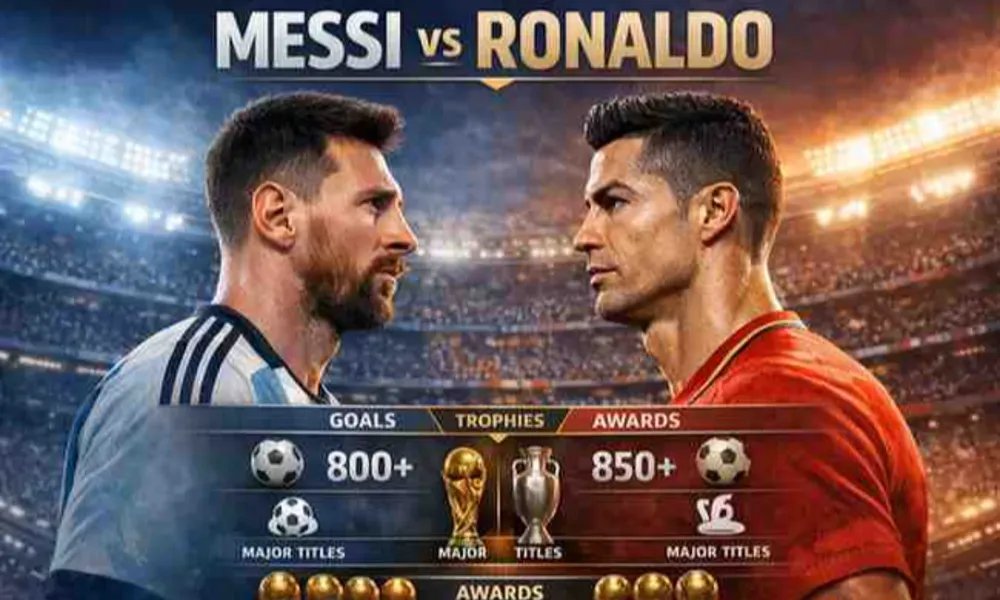
Messi vs Ronaldo: All About the Two Football Icons’ Career Records
-
 SPORTS9 months ago
Messi Jersey Argentina & Club Collection-Price, Number and History
-
 SPORTS8 months ago
Chelsea vs Arsenal Head-to-Head Historic Rivalry
-
 SPORTS8 months ago
PSG vs Bayern Munich Lineups Head To Head Battle