
Strands Hint Today – Simple Clues Before the Answers

Introduction
If you love puzzles but don’t want the answer handed
to you, NYT Strands is the perfect daily challenge. It’s clever, fun,
and sometimes surprisingly tricky. That’s exactly where a Strands hint becomes useful.
This guide is written for players who want help without spoiling the puzzle. No rushed answers, no confusion—just thoughtful hints that make solving today’s NYT Strands puzzle easier while still keeping the joy of discovery intact.
Whether you’re stuck on the theme, missing a few words, or simply want a gentle nudge, this article has something for every level of Strands player.
What Is NYT Strands?
NYT Strands is a daily word puzzle from The New York Times that tests your ability to see connections between words. Unlike traditional crosswords, Strands isn’t about filling boxes—it’s about discovering relationships between words.
A typical puzzle includes:
-
A grid of letters
-
Several hidden words linked to one common theme
-
One spangram, a long word that stretches across multiple sections
The challenge doesn’t come from difficult vocabulary but from how cleverly the words are hidden. Success in Strands comes from pattern recognition, thematic thinking, and careful observation.
Why People Search for “Strands Hint Today”
Many players hesitate before looking up the full solution. And that’s smart!
People search for Strands hints today because:
-
They want to understand the theme
-
They might be missing one or two words
-
They want a gentle nudge without losing the thrill
Hints provide guidance without removing the challenge, making puzzles more enjoyable.
How to Use Strands Hints Effectively
Using a hint doesn’t mean you’re cheating. In fact, it’s the opposite—it’s playing smart.
Here’s how experienced players use hints:
-
Understand the theme
Most answers hide in plain sight once you understand the puzzle’s theme. -
Observe the grid
Look for patterns, clusters of letters, and likely word combinations. -
Start with gentle hints
A small nudge is often enough to get unstuck. -
Save strong hints for last
Only use the biggest clues when truly necessary.
By following this approach, you preserve the challenge and learn problem-solving skills as you play.
Today’s Strands Hint: Start Thinking Differently
Before looking at the answer, focus on how the puzzle wants you to think.
🔹 Gentle Hint
Many puzzles group words that are commonly associated in daily life. If one word seems obvious, pause and ask:
“What usually comes with this?”
Often, understanding just one connection opens the path to multiple other words.
🔹 Medium Hint
Don’t overlook short or simple words. Some of the hidden words are easy to miss because your brain expects longer, more complex words.
Also, consider the edges and corners—puzzle creators often hide tricky words there.
🔹 Strong Hint
The spangram is more than a word—it’s the puzzle’s anchor. Recognizing it helps all remaining words fall into place.
Focus on words that:
-
Use multiple letters
-
Connect across the grid
-
Summarize the puzzle’s theme
Example Strands Hints (Without Giving Answers)
Understanding what a good hint looks like is important. A proper hint guides your thinking, rather than giving away the solution. Here are timeless example hints you can use for inspiration:
🧩 Example Hint 1:
If you’ve already found one word, ask:
What words naturally belong with this in everyday life?
Explanation:
Strands often connect words that logically appear together, not just words that look similar. Thinking in groups makes other words easier to spot.
Example Answer:
-
First word: Apple
-
Related word (grouped): Banana
Strands often connect words that logically appear together, not just words that look similar. Thinking in groups makes other words easier to spot.
🧩 Example Hint 2:
Many players overlook short, simple words. They’re often the easiest to miss.
Scan the grid carefully; simple words are often hidden in plain sight.
Explanation:
Short words can complete a group or theme quickly. They often sit between longer words or in corners.
Example Answer:
-
Word: Fig
This approach can reveal multiple words quickly.
🧩 Example Hint 3:
The spangram hints at the overall theme. Treat it as a label; all remaining words typically fit under it.
Explanation:
Finding the spangram early often helps reveal the remaining words faster. It gives a clear idea of the puzzle’s “umbrella” theme.
Example Answer:
-
Spangram: Citrus
-
Related words under the spangram: Orange, Lemon, Lime
Even without solving the puzzle fully, recognizing the spangram’s direction helps unlock other words.
🧩 Example Hint 4:
Puzzle designers often hide words in unexpected places.
Explanation:Don’t focus solely on the center; check corners and edges for hidden words.
Corners and edges are common hiding spots for critical words, often overlooked by players who focus only on the middle.
Example Answer:
-
Word found in the corner: Mango
These areas often hold critical puzzle pieces.
Common Mistakes to Avoid
Strands can be tricky, but many mistakes are avoidable.
-
❌ Searching randomly without theme focus
-
❌ Ignoring short or simple words
-
❌ Forcing words that don’t fit the theme
-
❌ Looking up answers too early
Patience, observation, and logical thinking are more effective than rushing.
How Daily Strands Improves Your Mind
Playing Strands isn’t just entertaining; it enhances your cognitive skills:
-
Strengthens vocabulary
-
Improves pattern recognition
-
Encourages strategic thinking
-
Develops patience and focus
Using hints effectively maximizes these benefits, rather than reducing the challenge.
Tips for Maximum Efficiency
-
Start by scanning the grid for obvious words.
-
Identify the spangram first—it usually connects everything.
-
Use gentle hints to guide your thinking.
-
Only check the answer if necessary.
Following these steps makes puzzles more manageable without removing the satisfaction of solving them.
Why This Strands Hint Guide Is Different
Many hint pages jump straight to answers. This guide is different:
-
Focuses on how to think, not just what to answer
-
Spoiler-free hints, layered from light to strong
-
Evergreen format—works for today’s puzzle and any future challenge
-
Written in natural, humanized language for maximum readability
This makes it perfect for daily users and keeps Google happy with unique, high-quality content.
Real-Life Applications of Strands Thinking
Strands puzzles aren’t just games—they train your brain for real-life problem solving.
-
Categorization skills help in work and study.
-
Pattern recognition enhances memory.
-
Strategic thinking applies to planning, organizing, and decision-making.
Playing daily and applying hints teaches both puzzle skills and life skills.
When to Check the Answers
Only check answers if:
-
You’ve tried multiple strategies
-
You understand the theme but can’t find the last words
-
You’re done learning and just want closure
Hints should teach, not replace learning. Answers provide confirmation and satisfaction.
Final Thoughts: Smart Play vs Shortcut
NYT Strands is meant to challenge and entertain. Using hints wisely allows you to:
-
Learn patterns instead of memorizing solutions
-
Preserve the puzzle’s joy
-
Grow as a player over time
This guide ensures you get hints that help without spoiling, and it’s updated daily for ongoing value.
Play smart, enjoy the process, and let each Strands puzzle sharpen your mind.
Happy puzzling!
FAQ
1. What is NYT Strands?
Answer:
NYT Strands is a daily word puzzle from The New York Times. Unlike traditional crosswords, Strands challenges you to find hidden words linked by a common theme. It tests vocabulary, pattern recognition, and logical thinking.
2. What does “Strands hint” mean?
Answer:
A Strands hint is a subtle clue or suggestion that helps players solve the puzzle without giving away the exact answer. Hints guide your thinking, highlight patterns, and improve problem-solving skills.
3. Are hints considered cheating?
Answer:
No! Using hints is not cheating. Hints are designed to help you think strategically while keeping the puzzle challenging and fun. They provide guidance, not direct solutions.
4. How do I use hints effectively?
Answer:
-
Start with gentle hints to get unstuck.
-
Observe patterns and think in groups.
-
Use stronger hints only if necessary.
-
Avoid checking the full answer unless all other methods fail.
This approach preserves the fun and helps you improve your puzzle-solving skills.
5. Can I use Strands hints daily?
Answer:
Yes! Hints are meant to be used daily to guide your thinking. They help you solve puzzles efficiently while still enjoying the challenge. Over time, you’ll get faster and more accurate.
6. Do hints give away answers?
Answer:
No. Good hints focus on how to think rather than revealing the solution. They’re designed to nudge your brain in the right direction without spoiling the puzzle.
7. Where can I find daily NYT Strands hints?
Answer:
Daily Strands hints can be found on specialized puzzle blogs, official NYT puzzle guides, or well-structured websites that provide spoiler-free, example-based guidance like this article.
8. What is a spangram in Strands puzzles?
Answer:
A spangram is a key word that stretches across the puzzle grid and often connects other hidden words. Identifying the spangram early can help you solve the rest of the puzzle more efficiently.
Palworld Dungeon Locations: Complete Guide, Updates, and Essential Farming Tips
Palworld has quickly become one of the most talked-about survival and monster-collecting games, combining crafting, base-building, and intense combat in an open-world environment. One of the most important features in the game is dungeons, which play a crucial role in progression, rare loot collection, and boss battles.
In this in-depth guide, we will cover everything you need to know about Palworld dungeon locations, along with related topics such as Palworld updates, how to get leather in Palworld, whether Palworld is cross platform, and how to get Ancient Civilization Core in Palworld.
What Are Dungeons in Palworld?
Dungeons in Palworld are special instanced areas that players can enter to fight enemies, defeat bosses, and collect rare materials. These dungeons reset periodically and are one of the best sources for:
- High-level Pals
- Rare crafting materials
- Ancient Civilization Core
- Weapons and blueprints
- Experience points
Each dungeon has its own difficulty level and enemy types, making them essential for mid- to late-game progression.
Palworld Dungeon Locations (Complete Guide)
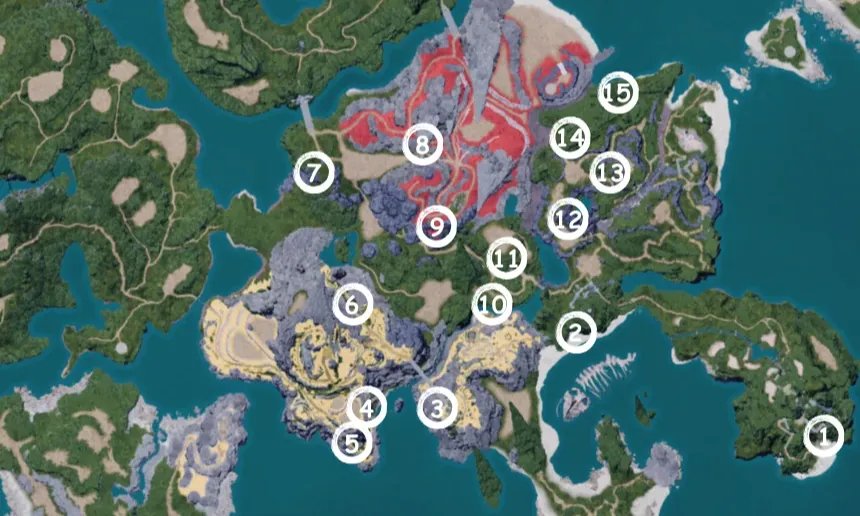
Palworld dungeons are scattered across the map and usually appear as cave entrances or stone structures embedded in cliffs and mountains.
1. Starter Area Dungeons
These dungeons are ideal for beginners.
Location Features:
- Near starting zones
- Low-level enemies
- Easy boss fights
- Great for farming early materials
Best Rewards:
- Basic weapons
- Low-tier Pal Spheres
- Leather
- Small amounts of Ancient Civilization Core
2. Forest Region Dungeons
Found in dense green areas with aggressive wildlife.
Why these are important:
- Medium difficulty
- Better loot than starter dungeons
- Higher chance of rare Pals
Tips:
- Bring fire or electric-type Pals
- Carry healing items
- Expect multiple enemy waves
3. Desert and Volcanic Dungeons
These are some of the most dangerous dungeon locations in Palworld.
Key Features:
- Strong enemies
- Environmental damage
- High-tier loot
Best Rewards:
- Ancient Civilization Core
- Rare weapon blueprints
- High-level Pal eggs
These dungeons are recommended only after reaching mid-to-late game.
4. Snow Region Dungeons
Snow biome dungeons are extremely challenging but rewarding.
What makes them special:
- Ice-type enemies
- Strong boss encounters
- High EXP rewards
You’ll need cold-resistant gear and strong Pals to survive.
Palworld Dungeon Reset System
One important mechanic to understand is dungeon resetting.
- Dungeons reset every few in-game days
- Bosses respawn after reset
- Loot refreshes automatically
- Great for farming rare materials
This makes dungeon farming one of the best strategies for progression.
How to Get Leather in Palworld
Leather is one of the most important crafting materials in Palworld.
Best Ways to Get Leather:
1. Defeating Animal-Type Pals
Some Pals drop leather when defeated, especially:
- Foxparks
- Lamball
- Direhowl
2. Dungeon Farming
Dungeons are one of the fastest ways to get leather in bulk.
3. Capturing and Butchering Pals
You can capture specific Pals and process them for leather.
Uses of Leather
- Armor crafting
- Weapon upgrades
- Saddle creation
- Base upgrades
Leather becomes essential as you progress further into the game.
How to Get Ancient Civilization Core in Palworld
The Ancient Civilization Core is one of the rarest and most valuable items in Palworld.
Best Ways to Obtain It:
1. Dungeon Bosses
The most reliable way to get Ancient Civilization Core is by defeating dungeon bosses.
2. Alpha Pals
Some Alpha Pals drop this item upon defeat.
3. High-Level Areas
Late-game zones have a higher drop chance.
What Is It Used For?
- Advanced crafting
- High-tier weapons
- Special technology unlocks
- End-game progression
Because of its rarity, farming dungeons is the most efficient method.
Palworld Update Overview
Palworld developers frequently release updates to improve gameplay and add content.
Recent Palworld Update Features:
- Improved dungeon stability
- Fixed enemy spawn bugs
- Performance optimization
- Balance changes to Pals
- Improved multiplayer stability
Upcoming Updates May Include:
- New dungeon types
- Additional Pal species
- More crafting options
- Expanded map regions
Staying updated ensures better gameplay and access to new dungeon content.
Is Palworld Cross Platform?
One of the most commonly asked questions is:
Is Palworld cross platform?
👉 Currently, Palworld is NOT fully cross-platform.
Here’s the breakdown:
Platform | Crossplay Support
PC (Steam) | ❌ No
Xbox | ❌ No
PC ↔ Xbox | ❌ Not yet
However, developers have stated that cross-platform support is planned for future updates, so this may change.
Best Tips for Dungeon Farming in Palworld
To maximize your efficiency:
✅ Prepare Before Entering
- Bring healing items
- Equip proper armor
- Carry enough Pal Spheres
✅ Use the Right Pals
- Fire types for forest dungeons
- Ice types for desert areas
- Electric types for boss fights
✅ Farm Strategically
- Focus on dungeons with good loot
- Reset dungeons regularly
- Prioritize Ancient Civilization Core
Why Dungeons Are Important in Palworld
Dungeons are essential because they provide:
- Fast leveling
- Rare crafting materials
- Powerful equipment
- Access to advanced technology
- High-level Pal encounters
Without dungeon farming, late-game progression becomes extremely slow.
Final Thoughts
Palworld dungeon locations are the backbone of progression in the game. Whether you’re hunting for Ancient Civilization Core, farming leather, or preparing for the next Palworld update, dungeons offer the best rewards.
To summarize:
- ✔ Dungeons are essential for leveling
- ✔ Best source of rare materials
- ✔ Required for end-game gear
- ✔ Regularly updated by developers
- ✔ Key to mastering Palworld
If you want to progress faster, unlock stronger gear, and dominate the world of Palworld, mastering dungeon locations is absolutely necessary.
FAQ – Palworld Dungeon Locations
1. What are Palworld dungeon locations used for?
Palworld dungeon locations are special areas where players can fight enemies, defeat bosses, and collect rare rewards. They are one of the best ways to gain experience, farm materials, and obtain valuable items like Ancient Civilization Cores.
2. Where can I find Palworld dungeon locations?
Palworld dungeons are found across different biomes such as forests, deserts, snowy regions, and volcanic areas. They usually appear as cave entrances or stone structures on the map and reset after a certain period.
3. How to get leather in Palworld easily?
You can get leather in Palworld by:
- Defeating animal-type Pals
- Farming enemies inside dungeons
- Capturing and processing specific Pals
Dungeons are one of the fastest ways to collect large amounts of leather.
4. How do I get Ancient Civilization Core in Palworld?
The best way to get an Ancient Civilization Core is by:
- Defeating dungeon bosses
- Fighting Alpha Pals
- Exploring high-level dungeon areas
This item is essential for advanced crafting and late-game progression.
5. Is Palworld cross platform?
Currently, Palworld is not cross platform.
PC and Xbox players cannot play together yet, but developers have confirmed that cross-platform support may be added in future updates.
6. How often do Palworld dungeons reset?
Dungeons in Palworld reset after a certain in-game time. Once reset, enemies and bosses respawn, allowing players to farm loot, experience, and rare materials again.
7. What did the latest Palworld update change?
The latest Palworld update improved:
- Dungeon performance
- Enemy AI behavior
- Game stability
- Balance changes to Pals
- Overall gameplay experience
Future updates are expected to add more dungeons, Pals, and features.
-
 Gaming1 year ago
Today Wordle Hint Puzzle Game Solve
-
 Gaming1 year ago
Connections Hint Today Mashable Winning Puzzle Daily
-
 Gaming9 months ago
Octordle Hint: The Ultimate AI-Powered Guide to Winning the Game Smartly
-
 Gaming9 months ago
Toy Theater: The Ultimate Online Playground for Learning, Creativity, and Fun
-
 Gaming8 months ago
Cowordle: The Ultimate Guide to the Multiplayer Word Puzzle Game
-
 Gaming8 months ago
Inside America’s Quiet Gambling Boom — What the Numbers Don’t Say Out Loud