
India National Cricket Team vs New Zealand National Cricket Team Timeline

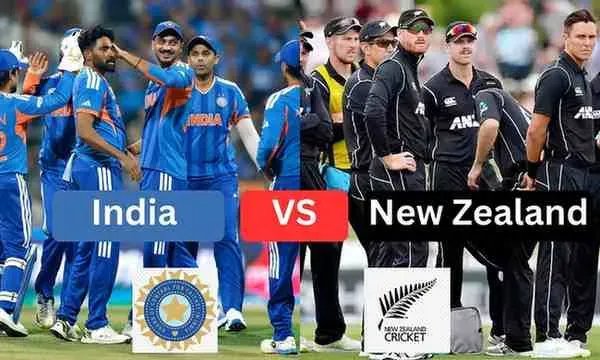
New Zealand national cricket team Vs India national cricket team timeline explores their match performances for all of their cricket history. Two nations separated by oceans. Dozens of series, semi-finals, finals, and best matches they have already played and will play in future. Here you would know about every vital faced from 1955 to 2026, a very high analytical view in expert level. If you want to see all records of New Zealand Vs India, visit the ESPNcricinfo website.
India vs New Zealand First Test in 1955
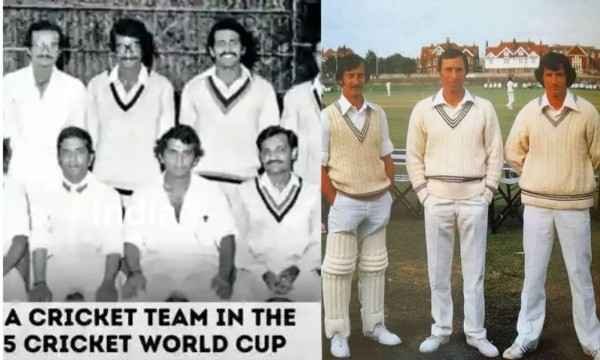
The India vs New Zealand Cricket Team timeline begins on November 19, 1955, at Fateh Maidan in Hyderabad. The five-match Test series that followed saw India win convincingly, claiming the series 2–0 with two wins and three draws.
At this point, both nations were still finding their identity in the sport. India’s strength point was spin bowling, while New Zealand relied on seam bowling. India as the stronger team on paper, New Zealand as a competitive and newborn opponent who would never cross over.
Key figures in this era included India's spinner Subhash Gupte and New Zealand's opening batter Bert Sutcliffe, who showed considerable grit against a strong Indian attack. Though these matches lacked the commercial drama of modern cricket, they laid down the sporting foundation between two nations that would go on to meet over 200 more times across seven decades.
First ODI in 1975 Cricket World Cup
The format of international cricket changed forever with the first Cricket World Cup in 1975. India and New Zealand met during that tournament, and it was the Kiwis who came away with the result that the limited-overs format would be a different battleground entirely.
New Zealand's adaptability to shorter-format cricket was evident from the start. Their bowlers exploited swing and seam conditions, and their batting showed an ability to pace an innings methodically — skills that would become hallmarks of their ODI identity for decades to come. For India, this early loss planted a seed of World Cup anxiety against New Zealand that would resurface many times in the years ahead.
The 1976–1988 Test Series
The period between 1976 and 1988 represents the first truly competitive chapter of this rivalry. Two giants defined this era: Sunil Gavaskar for India and Richard Hadlee for New Zealand.
Gavaskar's double century during the 1976 Kanpur Test remains one of the most celebrated individual achievements in this rivalry — a masterclass of patience and technique against a disciplined Kiwi attack. India won that home series convincingly. However, away from home, the story changed dramatically. In 1981, New Zealand won a Test in Wellington, showing that on home conditions they could challenge any team in the world.
Then came 1988 — the moment that first shattered India's comfort in this rivalry. New Zealand won the Test series in India. It was a result that shocked the cricket world and remains one of the most significant milestones in the entire India vs New Zealand timeline. Richard Hadlee's ability to generate pace, swing, and bounce in conditions that typically favoured spin was central to New Zealand's success. He was the greatest fast-bowling instrument ever deployed against India during this period, and his performances helped establish New Zealand's belief that they could compete with anyone, anywhere.
Sachin Tendulkar Enters the Stage and ODI Cricket Expands in 1990
The 1990s brought a transformation to Indian cricket with the emergence of Sachin Tendulkar. His performances against New Zealand across both Tests and ODIs elevated the quality of this rivalry significantly and gave India a batting anchor who could win matches almost single-handedly.
India strengthened across formats during this decade, developing depth through Anil Kumble's leg-spin mastery and Javagal Srinath's pace. New Zealand built their middle order around disciplined players like Martin Crowe and, later, Nathan Astle. The ODI head-to-head through the 1990s remained competitive, with India holding the edge at home while New Zealand challenged strongly in conditions that suited their style of play.
The Wellington Test loss in 1998/99 underscored that New Zealand at home was never a comfortable assignment for any Indian touring side, regardless of on-paper rankings. This era proved that the rivalry had genuine balance — India stronger at home, New Zealand formidable in their own conditions.
2000 ICC Knockout Trophy Final
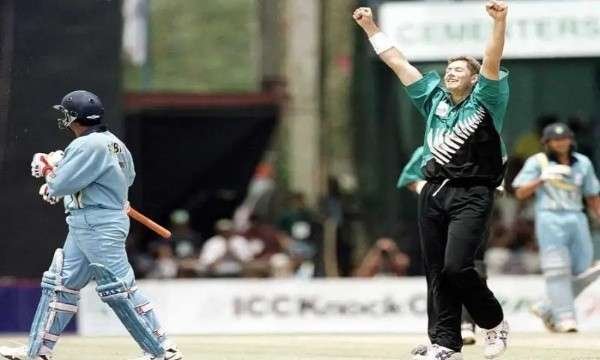
The ICC Knockout Trophy Final in Nairobi in 2000 was the first time these two teams met in an ICC knockout match, and New Zealand won it by four wickets under Stephen Fleming's calm and composed leadership. For India, this loss began a troubling pattern — performing well in tournament group stages but struggling to close out knockout matches against New Zealand.
Fleming's tactical discipline and New Zealand's collective execution under pressure were traits that would define their ICC approach for the next two decades. This match planted the psychological seed of a problem that Indian cricket would not fully solve until 2023. It also established that New Zealand, despite their modest resources, could lift their game to world-beating levels when the pressure was highest and the stakes were greatest.
2002–2010 Test and ODI Series Timeline
This period saw results swing back and forth, with some truly memorable individual performances shaping the narrative. New Zealand's 10-wicket Test win in Wellington in 2002 was one of India's most comprehensive defeats away from home — a result that signalled how vulnerable India could be in seaming New Zealand conditions.
Conversely, Gautam Gambhir's extraordinary innings of 137 in Napier in 2009 helped India save a Test they had no right to save — a moment of individual brilliance that prevented what could have been a damaging series defeat. Brendon McCullum's emergence during this era fundamentally changed how New Zealand approached the game. His aggressive philosophy and inspirational leadership began to shift New Zealand from being merely competitive to being genuinely exciting and dangerous. The McCullum effect would fully bloom in the decade that followed, turning New Zealand into one of cricket's most respected and feared sides.
T20 International History in (2008–2014)
India and New Zealand first played T20 Internationals in 2008/09, with New Zealand claiming that inaugural series. The shortest format introduced an entirely new dimension to this rivalry — one where improvisation, power hitting, and death-bowling execution became the decisive factors rather than sustained technique or patience.
India's growing T20 strength through the IPL era made them a dominant force at home. But New Zealand's tactical precision and ability to build competitive totals with modest resources made them dangerous in neutral conditions and on home soil. Through 2008 to 2014, their T20 record remained closely contested, with neither team able to establish clear dominance over the other. This was the period that made it clear: in T20 cricket, the India vs New Zealand rivalry was truly fifty-fifty.
2019 World Cup Semi-Final
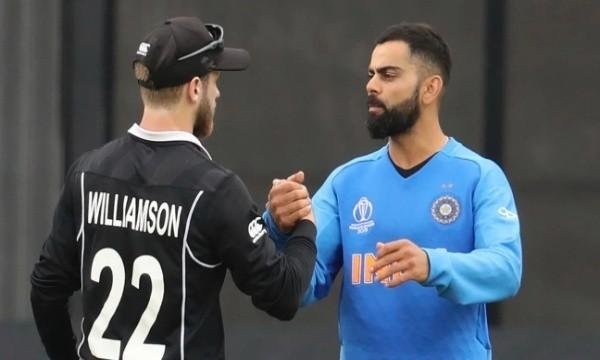
On July 9–10, 2019, at Old Trafford in Manchester, India suffered one of their most heartbreaking exits in World Cup history. Rain interrupted the match across two days, but it was the final moments that India's fans will never forget. MS Dhoni, coming to the crease in a near-impossible run chase, was run out in what became one of the most replayed moments in cricket history. New Zealand won by 18 runs.
Matt Henry and Trent Boult exploited overcast Manchester conditions to dismantle India's top order early. India never recovered the required run rate. The result confirmed what had been building for years: New Zealand, in knockout cricket, had a unique ability to neutralise India's explosive batting lineup through intelligent swing bowling and disciplined fielding.
2021 World Test Championship Final
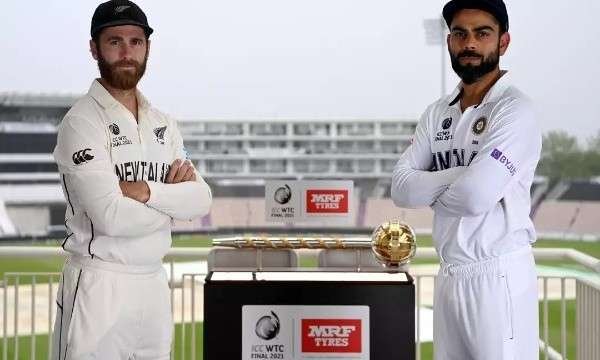
At the Ageas Bowl in Southampton in June 2021, New Zealand and India contested the inaugural World Test Championship Final. New Zealand won by eight wickets. Kyle Jamieson, Trent Boult, and Tim Southee combined to exploit swing conditions brilliantly, dismissing India's batting lineup twice in a match extended across six days due to weather.
Ajaz Patel's Historic 10-Wicket Haul in Mumbai in 2021
In December 2021, at the Wankhede Stadium in Mumbai — the city of his birth — New Zealand's left-arm spinner Ajaz Patel took all ten Indian wickets in a single innings, finishing with figures of 10 for 119. He became only the third bowler in the 150-year history of Test cricket to achieve this, joining England's Jim Laker (1956) and India's own Anil Kumble (1999).
Patel was born in Mumbai but emigrated to New Zealand as a child, making his achievement at Wankhede a deeply personal and emotional homecoming of historic proportions. His match haul of 14 wickets also became the best-ever bowling performance by a visiting bowler in India. The Indian dressing room, recognising the magnitude of what they had witnessed, reportedly applauded him as he walked off.
2023 World Cup Semi-Final
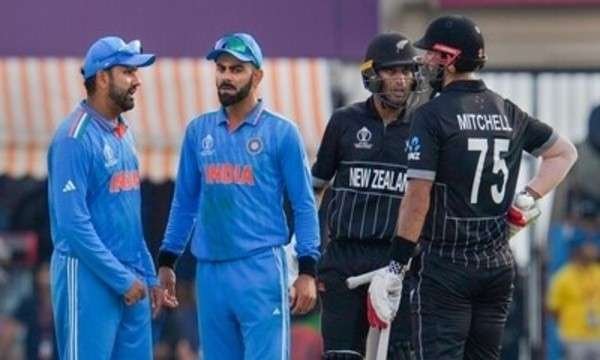
November 15, 2023. Wankhede Stadium, Mumbai. India 397 for 4. New Zealand 327 all out. India won by 70 runs.
This match was India's definitive answer to years of World Cup heartbreak against New Zealand. Virat Kohli scored his 50th ODI century, surpassing Sachin Tendulkar's record of 49, while Shreyas Iyer struck his second consecutive century of the tournament in just 67 balls. Together, they helped India post the highest-ever total in a World Cup knockout match.
Mohammed Shami then produced a bowling spell for the ages: 7 wickets for 57 runs — the best bowling figures by an Indian in ODI cricket history and the best by any bowler in a World Cup knockout. Even Daryl Mitchell's defiant 134 off 119 balls could not save New Zealand. India walked into their World Cup Final with an average victory margin of 175 runs across their knockout matches- the most dominant knockout campaign in the tournament's history.
2024 Test Series Whitewash
In October–November 2024, New Zealand arrived in India for a three-match Test series and did something that no visiting team had ever done in 92 years of Indian cricket: they whitewashed India 3–0 on Indian soil.
The first Test in Bengaluru was won by New Zealand by 8 wickets. Pune fell to them by 113 runs. The third in Mumbai was won by 25 runs — ending India's 18-match home Test winning streak. It was India's first home series defeat in 12 years, and the first-ever whitewash by any visiting team in a three-match series in India.
Crucially, New Zealand achieved this without Kane Williamson. Mitchell Santner outbowled Ashwin and Jadeja on turning pitches. Will Young scored 244 runs across the series as Player of the Series. Virat Kohli averaged just 21.33 in Tests at home through 2024, and India were bowled out for under 160 three times in three Tests.
The 2024 whitewash was not a fluke. It exposed a structural vulnerability in India's batting — a pronounced weakness against left-arm spin and probing seam in helpful conditions — that required urgent and systematic correction. India's selectors and coaching staff faced hard questions, and the answers they found would shape their response in the months that followed.
New Zealand Win Their First-Ever ODI Series in India, January 2026
A little over a year after the Test whitewash, New Zealand returned to India and delivered yet another historic result: a 2–1 ODI series win — the first time they had ever won an ODI series on Indian soil in the history of the two nations.
India won the opening match in Vadodara in a dramatic last-over finish, chasing 301 to win with 4 wickets and 6 balls to spare. New Zealand hit back immediately in Rajkot, where Daryl Mitchell struck an unbeaten 131 to help chase down 285 comfortably. In the decisive third ODI in Indore, Mitchell struck 137 and Glenn Phillips added 106, with their 219-run partnership dismantling India's bowling completely. New Zealand posted 337 for 8 and bowled India out for 296, winning by 41 runs.
Mitchell was Player of the Series with 352 runs — his fourth century against India in India across formats. New Zealand's spin attack, including debutant Jayden Lennox who bowled with remarkable maturity on small grounds, consistently outperformed India's Kuldeep Yadav and Ravindra Jadeja in Indian conditions.
The practical solution India must address going forward: a restructured approach to spin bowling at home in the middle overs of ODIs, with greater variety in pace and more proactive use of their powerplay advantage to reduce the pressure that allows opponents to build partnerships freely in overs 20 to 40.
The 5-Match T20I Series, January 2026 Win 4–1
India's response to the ODI series defeat came immediately and emphatically. In the five-match T20I series that followed across Nagpur, Raipur, Guwahati, Visakhapatnam, and Thiruvananthapuram, India won 4–1 — using the matches as a structured rehearsal for the T20 World Cup 2026.
Abhishek Sharma was consistently destructive at the top of the order throughout the series. Ishan Kishan produced the innings of the series in the fifth T20I — a maiden T20I century off just 43 balls — while Suryakumar Yadav became only the third Indian to cross 3,000 T20I runs during this campaign. Arshdeep Singh took a career-best 5 for 51 in the final match. India hit 271 for 5 in that fifth T20I — their highest-ever T20I total against New Zealand.
The 4–1 result sent a clear message ahead of the World Cup: whatever structural problems existed in India's ODI and Test cricket, their T20 blueprint of high-octane top-order batting, smart use of spin in the middle overs, and Bumrah as the finisher with the ball was functioning at peak level.
ICC Men's T20 World Cup 2026 Final in March 8, 2026
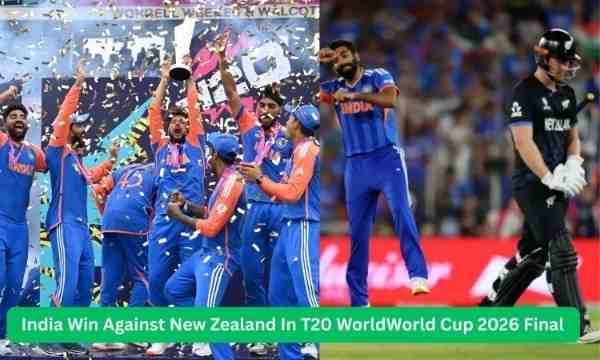
At the Narendra Modi Stadium in Ahmedabad, in front of 86,824 spectators, India and New Zealand met in the final of the ICC Men's T20 World Cup 2026. India won by 96 runs — their biggest-ever T20I win by runs, and the most comprehensive World Cup Final performance in the format's history.
India batted first and posted 255 for 5. Sanju Samson struck 89, Ishan Kishan contributed 54, and Abhishek Sharma added 52. New Zealand tried several bowling options, rotating through seven bowlers in an attempt to break India's momentum, but the plan unravelled quickly after the first two overs. When New Zealand batted, Jasprit Bumrah was simply unplayable — 4 wickets for 15 runs in four overs, with his signature dipping off-cutter claiming wickets that batters could anticipate but not counter. Axar Patel took 3 for 27. New Zealand were bowled out for 159. India retained the T20 World Cup, becoming the first team in history to successfully defend the title.
Sanju Samson was Player of the Tournament, having scored 275 runs in just 138 balls across the knockout phase- a burst of late-tournament form that underlined both the depth and the mental resilience of a team that had learned from every painful exit that preceded this triumph.
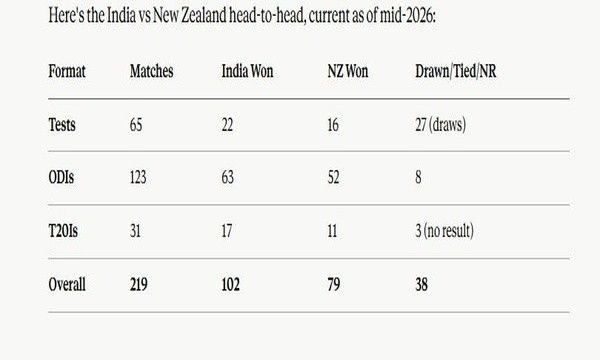
Head-to-Head Records:
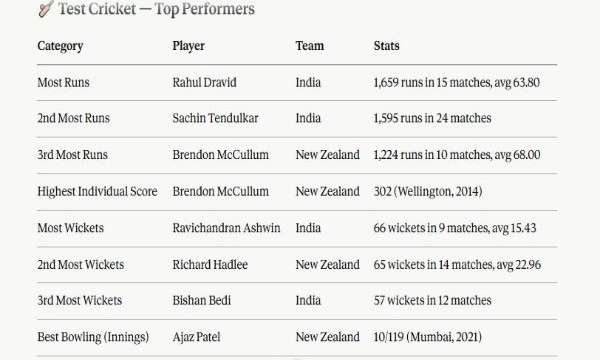
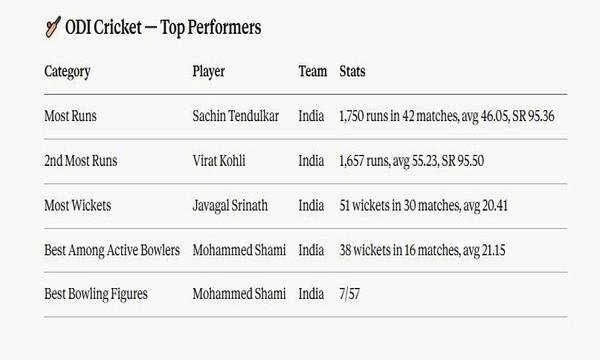
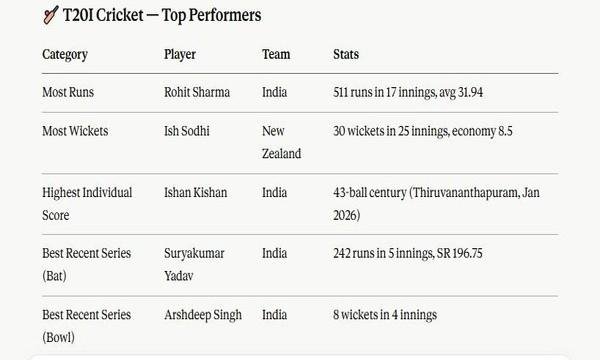
Top Performers in India vs New Zealand History
TEST
ODI
T20
FAQs
When did India and New Zealand first play a Test match?
The two teams first met in a Test match on November 19, 1955, at Fateh Maidan in Hyderabad. The five-match series ended with India winning 2–0, with three draws.
Who has won more matches overall between India and New Zealand?
India leads the head-to-head across all formats. In Tests, India has won more matches and series. In ODIs, India leads approximately 63–52 from 123 matches. In T20Is, India leads 17–11 from 31 matches, with three ties.
What is the most iconic individual bowling performance in this rivalry?
Ajaz Patel's 10-wicket haul in a single innings at Wankhede Stadium in December 2021 is the greatest individual bowling achievement in the 70-year history of this rivalry. Mohammed Shami's 7 for 57 in the 2023 World Cup semi-final is the greatest limited-overs bowling performance.
Did New Zealand ever whitewash India at home in Tests?
Yes. In October–November 2024, New Zealand whitewashed India 3–0 on Indian soil — the first time any team had ever achieved this in a series of three or more Tests in India in 92 years of Test cricket.
Who won the 2026 T20 World Cup Final between India and New Zealand?
India won by 96 runs at the Narendra Modi Stadium in Ahmedabad on March 8, 2026. Jasprit Bumrah took 4 for 15, and India posted 255 for 5 to defend comfortably. India became the first team in history to successfully retain the T20 World Cup.
Who is the most dangerous New Zealand batter against India in recent years?
Daryl Mitchell. He scored four centuries against India in India across Tests and ODIs between 2023 and 2026, including 352 runs as Player of the Series in the January 2026 ODI series. He is consistently the most impactful overseas batter seen against India in home conditions in recent memory.
What is India's next series against New Zealand?
India tour New Zealand in October–December 2026 for a full-format series of 5 T20Is, 5 ODIs, and 2 Tests — confirmed as the largest inbound touring series in New Zealand Cricket history.
References: All match data and statistics verified using ESPNcricinfo, ICC official records, and BCCI fixture lists.
Introduction:
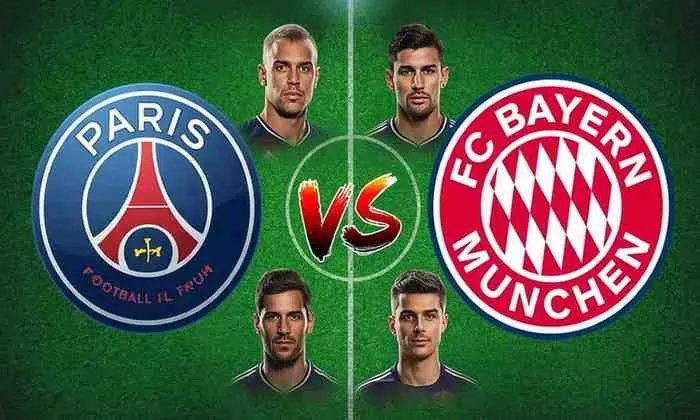
The 2020 Champions League final pits Paris Saint-Germain (PSG) against Bayern Munich, and it's more than just a battle of two giants in European soccer — it’s two philosophies, strategies and star power facing off. Both are perennial members of the absolute elite in world football, and every time they step onto the big stage, it's sure to be a firestorm. The grandeur between PSG and Bayern is never short of anything, from UEFA Champions League finals to high-octane knockout matches.
To Know More: Chelsea Vs Arsenal Head To Head
Head-to-Head Battle History:
The PSG vs Bayern Munich battles have simply given another chapter to their emerging rivalry in European football. They’ve played each other so many times, but every game is its own node in the great European football narrative. Here, we break down some of your favourite actresses' most significant, dramatic pairings ever:
Early Encounters: 1994/95 UEFA Cup
PSG and Bayern first met in the 1994/95 UEFA Cup round. Both clubs were hoping to announce themselves on the European stage, but Bayern came out on top 2-1 on aggregate to advance. This was a game that set the stage for years to come.
A rising force: 2017/18 UEFA Champions League group stage
By the time 2017/18 came around, PSG were ready for business. Bayern claimed a 3-1 victory in the group stage in Germany, but PSG answered back with an impressive 3-0 win at home in the return leg. This was a glimpse into the capacity of PSG’s attack, which it can unleash through Neymar, Edinson Cavani and Kylian Mbappé. With the two clubs showcasing world-class ability, the game was an indicator of things to come.
The 2020 UEFA Champions League Final: An Unfortunate Loss for PSG
One of the greatest images in this rivalry was the picture of PSG players celebrating on their way to their first-ever Champions League final last year. But despite creating a handful of opportunities, PSG ultimately came up short in the final as Bayern Munich secured a 1-0 win when Kingsley Coman’s header secured the title. The success was Bayern’s sixth European Cup, establishing them as one of the best clubs in Europe. It was a crushing blow for PSG on their quest for European supremacy.
2021 UEFA Champions League Quarterfinals: An Action-Packed Breakneck_Style Knoockout
The rivalry added another memorable chapter with the quarterfinals of 2021. PSG took the first leg, 3-2 in Paris as Kylian Mbappé netted twice; … Finally, in the internal return leg at the Allianz Arena, Bayern won 1-0, but this was not enough to get them through on aggregate. PSG went through on away goals and there was plenty of drama, late goals and raw tension in this tie as the battle heated up.
Battles to Come: An Unresolved War of Who’s on Top
This rivalry is already stunning, and it’s sure to remain so for the foreseeable future. London club.s The two London sides have been at the top of European football for a number of years, and continue to build on their squads and style. Every match between these two sides will be a cracker, filled with moments that can change the game.
Total Achievements of PSG vs Bayern Munich:
🔴 Paris Saint-Germain (PSG)
Domestic Titles (France)
- Ligue 1: 12 times
- Coupe de France: 14 times
- Coupe de la Ligue: 9 times
- Trophée des Champions: 12 times
European & International
- UEFA Champions League: 0
- UEFA Cup Winners’ Cup: 1 (1995–96)
- UEFA Champions League Runner-up: 1 (2019–20)
Total Major Trophies: ≈48
🔵 Bayern Munich
Domestic Titles (Germany)
- Bundesliga: 33 times
- DFB-Pokal (German Cup): 20 times
- DFL-Supercup: 10+ times
European & International
- UEFA Champions League: 6 times
- UEFA Super Cup: 2 times
- FIFA Club World Cup: 2 times
- Intercontinental Cup: 2 times
Total Major Trophies: ≈83+
Head-to-Head Achievement Summary
- Domestic dominance: PSG (France) vs Bayern (Germany)
- European success: Bayern Munich clearly ahead
- Champions League titles:
- PSG: 0
- Bayern Munich: 6
Memorable Moments:
The PSG vs Bayern Munich rivalry has brought with it some of the most memorable moments in recent footballing history. From the sensational goals to the tense knockout players, some of these:
Kingsley Coman’s Header (2020 Final)
The only goal of the match: Kingsley Coman heads in for Bayern Munich to win the 2020 UEFA Champions League final. Coman’s goal brought Bayern their sixth European crown and also represented the agony that PSG had rooted in them, despite playing so well.
Kylian Mbappé’s Brace (2021 Quarterfinals)
In 2021, his finest performance was certainly in the quarterfinals. We need a special connection from Real Madrid bcoz, on loan could be a risky deal as he now knows more of Pochettino and PSG altogether. Most likely Mbappe will also stay at PSG most time. It was his pace and deadly finishing that proved to be the game-changer in that fixture.
Neymar’s Masterclass (2017 Group Stage)
Neymar shone in PSG's 3-0 win at home to Bayern during a group-stage match-up between the two sides in 2017, clinching victory. It was his creativity and ball-carrying, evading defenders, that proved the difference as Bayern failed to contend with PSG’s attacking flow.
Bayern’s Comeback (2021 Quarterfinals)
Bayern Munich responded with a gritty 1-0 victory in the 2021 quarterfinals’ return leg that has left PSG teetering on the edge. Despite the win, Bayern were out on away goals, illustrating their never-say-die mentality.
Key Figures Who Define the Rivalry
This game means even more knowing that each time PSG and Bayern Munich step on the pitch, some of the best players in the history of football square off. These are the key contributors who have shaped this rivalry:
Kylian Mbappé (PSG)
A face of PSG’s front line, Mbappé is known for his lightning quickness and his killer finishing ability as he penetrates even the best defences. He has been a thorn in Bayern Munich’s side: his pace on the counter-attack has troubled their high defensive line.
Lionel Messi (PSG)
One of the best football players ever, his inclusion in this rivalry brings an extra sheen that can’t be ignored. He is a menace for Bayern with his dribbling, vision and ability to make something happen from nothing on the football pitch. Messi’s intelligence and knowledge of the game also mean that he can dictate the pace, which is something PSG are likely to benefit greatly from.
Neymar Jr. (PSG)
Neymar adds a degree of pizzazz and imagination to PSG’s frontline. With his dribbling abilities and vision, ability to create a goal out of nowhere, Neymar has always been PSG’s X-Factor in their fights against Bayern Munich.
Robert Lewandowski (Bayern Munich)
Lewandowski is a striker among the deadliest in the world. Brilliant clinical finishing, a box intelligence and big-time ability. Lewandowski’s goals have been a perennial vein of Bayern Munich power, especially in big games, like the ones against PSG.
Thomas Müller (Bayern Munich)
The German international is a key player at Bayern, with his off-the-ball running and experience of European football invaluable to the Bavarians. He plays others into the game, makes others better and scores his share of timely goals. His versatility, combined to his footballing brain make him the perfect fit for Bayern's attacking system.
Manuel Neuer (Bayern Munich)
Ranked as one of the world’s greatest goalkeepers, he possesses shot-stopping reflexes, towering leadership qualities and a sweeper-keeper style. When he plays against PSG, he is in sweeping action to keep Messi, Mbappé and Neymar under control.
Injury Updates and Team News:
In any big game, injuries and suspensions can greatly influence the predicted lineups of both teams. Beyond that, there are players for both sides — Marco Verratti on PSG and Ángel Di María, who often play a very important role in their team's success, but may not dictate the game.
PSG Injury Concerns:
Marco Verratti: The Italian midfielder plays a vital role in how PSG can advance. Without him, PSG could have a difficult time controlling the middle of the field.
Ángel Di María: His high-quality crosses and his dribbling are an asset. His absence might reduce PSG’s lateral play and creativity.
Bayern Munich Injury Concerns:
Serge Gnabry: Bayern Munich rely on the fleet-footed winger, especially on the break. That would be dealt a blow by his injury.
Leon Goretzka: In midfield, vital for balance to both prevent defensive penetration and initiate attacking play. Without him, Bayern’s midfield could be soft and vulnerable.
Predicted Starting Lineups:
Here are the projected lineups for this epic encounter based on current form, injuries and tactical options:
PSG (4-3-3 Formation):
Goalkeeper: Keylor Navas
Defenders: Achraf Hakimi, Marquinhos, Presnel Kimpembe, Nuno Mendes
Midfielders: Marco Verratti, Leandro Paredes, Ander Herrera
Forwards Henry Browne/Reuters Neymar Lionel Messi Kylian Mbappé
Bayern Munich (4-2-3-1 Formation):
Goalkeeper: Manuel Neuer
Defenders: Benjamin Pavard, Dayot Upamecano, Niklas Süle, Alphonso Davies
Midfielders Joshua Kimmich, Leon Goretzka, Thomas Müller
Forwards Kingsley Coman, Robert Lewandowski, Leroy Sané
Key Matchups:
Kyilian Mbappé vs Alphonso Davies: How will Mbappé’s pace match up with Davies’ strength and fitness? This wing duel will be crucial in opening up the attacking options for both sides.
Lionel Messi v Joshua Kimmich: How well the Argentine’s playmaking is stymied by Bayern in midfield through Kimmich taking care of his defensive role will determine how much both teams control the game.
Robert Lewandowski vs Marquinhos: The runs and finishing ability of Lewandowski will prove a problem for PSG’s captain, Marquinhos. How he deals with Lewandowski could be critical to PSG’s defensive success.
What You Can Expect in Their Next Meeting:
The stakes could hardly be higher as PSG and Bayern Munich get ready to clash in the 2025-26 UEFA Champions League. Both teams have developed as they had, with PSG (who for years were too “old” in both age and handling the ball) prioritising their attacking firepower and Bayern honing their tactics. Look for another exciting, high-stakes match — full of tension, excellent play and lots to talk about. Their rivalry must surely go on to be a grand narrative of our century, as both clubs compete for years to come for European superiority.
To Know More: FC Barcelona and Real Madrid CF EI Clasico
Fans Expectation:
Fans vs. Fans Social Platform
With the influence of social networks in this day and age, the rivalry between PSG fans and Bayern Munich fans has taken its battlefield to Twitter and co. On Twitter, Instagram and TikTok, fans on each side get in each other’s faces, putting up memes and chants — the kind that will usually roar through either the Etihad Stadium or Villa Park come kickoff. Whether it’s a reaction to a goal, tactical analysis or talking points, every tweet or post ratchets the banter up. Fans don’t just back their teams — they banter in real time, generating a buzzing atmosphere online. Social media provides these fervent fans with a platform from which to share their enthusiasm around the rivalry on an even greater scale.
Dear Fans of Both Teams
It is what really makes this rivalry special. For P.S.G. fans, every match offers another opportunity to show that you are one of the elite teams in Europe; for Bayern’s it is a test to protect your club’s legacy as a great one. This isn’t just about who wins, though; it’s more than that — it’s the passion, pride and loyalty of both fanbases. Whether in the stands, on social media or at home with family your passion for the club powers these fixtures. You guys keep cheering, keep believing, and you’ll see it in every game, that’s just the way it is.
Partying with Fan Traditions and Chants
Football is about the fans as well as the players, and when PSG and Bayern Munich get together, the songs and traditions come to life in their own right. The Parc des Princes is packed full of passionate PSG supporters, singing songs of pride and songs of hope that their European dream may finally be realised. At the same time, Bayern’s fans transform the Allianz Arena into a sea of red and white, singing and waving flags with unbridled confidence. The “München’s Bier, and the Bavarian's most popular song,” Bayern’s most famous song, “and PSG’s ‘Allez Paris will reverberate through the ground in what is sure to be an electric atmosphere. These are the traditions that have been handed down from generation to generation, and they’re the lifeblood of the rivalry—the ties that bond fans together as they create unforgettable memory after unforgettable memories.
Conclusion:
PSG vs Bayern Munich has become one of the great rivalries in European football over the years. The competition and world-class talent make for some unforgettable highlights. From their first meetings to their most recent Champions League matchups, these teams have played a part in many of the most memorable moments in the sport. What is certain, however, is that the next few times these teams meet on futures date will only help to create more pages in this famous rivalry between these two great schools.
FAQ:
1. When was the first PSG vs Bayern Munich match?
Their first encounter was in the 1994/95 UEFA Cup, where Bayern won 2-1 on aggregate.
2. How many times have PSG and Bayern Munich met in the Champions League?
PSG and Bayern have faced off multiple times, including the 2020 final (Bayern won 1-0) and 2021 quarterfinals (PSG advanced on away goals).
3. What is the biggest victory in the PSG vs Bayern Munich rivalry?
PSG’s biggest win was 3-0 in the 2017/18 group stage, while Bayern’s biggest victory was their 1-0 win in the 2020 final.
4. Why is PSG vs Bayern Munich a big rivalry?
The rivalry stems from both clubs’ ambition for European dominance, with PSG aiming to prove itself alongside Bayern's rich history of success.
5. Who are the key players in this rivalry?
Key players include Mbappé, Messi, Neymar (PSG) and Lewandowski, Neuer, Müller (Bayern Munich).
6. How many Champions League titles do PSG and Bayern have?
- Bayern Munich: 6 titles (1974, 1975, 1976, 2001, 2013, 2020).
- PSG: 1 final appearance (2020).
7. What happened in the 2020 UEFA Champions League final?
Bayern Munich won 1-0 with Kingsley Coman’s header, securing their 6th title.
8. How often do PSG and Bayern meet in the Champions League?
They meet whenever drawn in the tournament, with major clashes in the final (2020) and quarterfinals (2021).
9. What are the most memorable moments in the rivalry?
- Coman's winner in 2020.
- Mbappé’s brace in the 2021 quarterfinals.
- PSG's 3-0 win in 2017.
10. Who has the better record in the rivalry?
Bayern Munich has a superior record with 6 Champions League titles, while PSG is still chasing their first European crown.
11. How do PSG fans react to their rivalry with Bayern Munich?
PSG fans are passionate and hopeful, seeing each match with Bayern as a step closer to their Champions League dream.
12. How do Bayern Munich fans feel about their rivalry with PSG?
Bayern fans are proud of their team’s success and see PSG as a tough but worthy opponent in their pursuit of continued dominance in Europe.
-
 SPORTS10 months ago
2026 T20 World Cup Ticket Price, Booking & Travel Tips
-
 SPORTS10 months ago
T20 World Cup 2026 All venue & Match Schedule
-
 SPORTS8 months ago
Messi vs Ronaldo: All About the Two Football Icons’ Career Records
-
 SPORTS8 months ago
Messi Jersey Argentina & Club Collection-Price, Number and History
-
 SPORTS8 months ago
Barcelona vs Real Madrid- A Big El Clasico Rivalry Explain
-
 SPORTS7 months ago
Chelsea vs Arsenal Head-to-Head Historic Rivalry